Thursday, May 7, 2020

Socialism and the Pandemic

The right wing of US politics takes every opportunity to condemn socialism, often citing Venezuela and Cuba as countries where socialism has been associated with economic dysfunction and poor decision making, not merely ignoring the role of authoritarianism but claiming that socialism requires an authoritarian regime to govern.

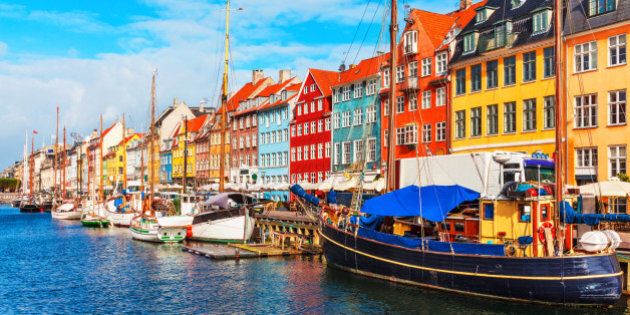
Conspicuous by its absence is mention of Denmark - you know, that country where McDonald's workers earn a living wage rather than being regarded as kids in their first jobs doing it for pocket money while in reality still financial dependents of their parents.  No, Denmark is not considered a socialist nation, as it has many features of a market economy side-by-side with high taxes and an extensive array of social welfare programs.  And it certainly does not satisfy the classic definition of socialism in which the means of production are controlled by the State.  But there is a great deal about the way Danish society works that Americans - especially those on the right - regard as socialist.

What did Denmark's government do about shutting down its economy for the pandemic?  It told everyone there would be a freeze.  Companies not in essential businesses would simply stop doing business.  They would not terminate or furlough any employees, but instead keep them on the payroll.  Those businesses would receive government assistance sufficient to cover their residual expenses, while employees would receive their paychecks from the government, essentially keeping pace with what they were earning.

Denmark has a strong economy.  Not strong like President Trump says the US economy is, but strong in reality.  The national treasury was brimming with budget surpluses, so there was enough money to cover the financing of the freeze for several months without incurring debt.

And now the Danish economy is reopening, as broadly and widely as any in the West - more so than most - with population-adjusted numbers of COVID-19 cases and COVID-19 deaths comparing favorably with the rest of Europe - and with the US.  Population-adjusted cases for Denmark are 45% of the US number; deaths, 39%.

When the Danish government first announced how it was going to manage the economic shutdown, it was estimated that for the USA to do the same thing, it would cost between $2T and $2.5T.  Perhaps you've noticed that we have already appropriated more money than that, yet the unemployment rate has soared, and other economic indicators are calamitous, with widespread effects on Americans that have people desperate to put an end to restrictions despite statistics that portend disastrous increases in cases and deaths.

Maybe there is no way we could have done what Denmark did.  It would have been so alien to the way our economy operates that a proposal to do such a thing would have been regarded as preposterous in the halls of Congress.

But let us be honest: the approach taken by Denmark is undeniably socialist, and the strength of the Danish economy that made it so easy to decide to do it exists despite the many aspects of that nation's economy that are socialist in character.

Let's broaden our view of socialism beyond Castro's Cuba and Venezuela under Chavez - the "socialism" America's right wing loves to hate - and acknowledge that it can work very well, indeed.

Tuesday, May 5, 2020

Truth in Science

For my entire adult life I have been a student of the philosophy of science with a keen interest in the subject of truth in science.

In the midst of this pandemic, it has struck me how many people - with no training in scientific disciplines - set forth assertions of what they believe to be facts.

In the Second Century the Greek mathematician and astronomer Ptolemy developed a mathematical model of an Earth-centric universe. Such a model, to gain acceptance as scientific theory, must be consistent with all known observations. To retain its status, it must then predict future observations: as they are made, the model must be consistent with them, too.

Ptolemy's model was complex, but it fit so well that a heliocentric model of our solar system posited a few centuries earlier by Aristarchus was superseded.

The Earth-centric model was very comfortable for humanity, which had long thought of our position in the universe as being at the center, as we believed its Creator had made us in His image.

It was not until the Sixteenth Century that mathematician and astronomer Copernicus developed a compelling heliocentric model. In the following century Kepler set forth a model of elliptical orbits, and Galileo made detailed observations with increasingly powerful telescopes that were consistent with the model of Copernicus, and not of Ptolemy - essentially proving Ptolemy wrong after fifteen centuries.

We have known that certain diseases are caused by infectious agents only since the 19th Century, thanks to the work of men like Pasteur and Koch.

Virology is relatively young. While Jenner (smallpox) and Pasteur (rabies) developed vaccines against diseases now known to be caused by viruses, the infectious agents responsible were poorly understood. The first virus to be studied by electron microscopy - essential because viruses are too small to be viewed with a light microscope - was the tobacco mosaic virus, in the 1930s.
The great influenza pandemic of 1918, then, occurred when virology was in its infancy. We have learned a great deal about viruses in the last century: indeed, we have arrived at a point at which we are able to isolate viruses, study their structure with electron microscopy, and characterize the proteins and genetic material (DNA or RNA) of which they are made. We can even sequence the genome of a virus.

Yet there are still secrets to be elucidated about what makes some viruses use humans as hosts, what factors enable viruses to cross from one host species to another, why some viruses are more lethal than other related strains, and why some are more readily transmitted from one human to another.
Then there is the fascinating subject of how viruses change over time, with genetic mutations and minor modifications of their protein structures.

Now that you have some sense of just how much we know about viruses - and, more important, how much remains to be learned - perhaps you can understand why sometimes expert opinions on specific points may diverge. When you layer over this the complexities of human behavior that influence the interactions between viruses and the host species, you get some sense of the extremely challenging field of the epidemiology of viral diseases.

All of this is what scientists are up against when they try to figure out the best ways of facing a pandemic.

Now imagine that you are an elected official or a government regulator trying to make decisions about protecting the public, completely dependent on advice from experts who are, in turn, frantically gathering and interpreting a constant stream of new data.

In a situation like this it is critically important to recognize what we don't know. Yes, we still have to make decisions. But when the people trying to make the decisions - relying on the best advice available from those who know the most in a discipline full of unknowns - make decisions you don't like, just say you don't like those decisions. Don't imagine you have the knowledge to support a coherent argument that the decisions are wrong - if those decisions are made after careful consideration of the best advice to be had.

And if you believe you know the truth of the science, please remember Ptolemy.


Thursday, April 30, 2020

Remdesivir: First Glimpse of the ACTT

The National Institute of Allergy and Infectious Disease (NIAID) has issued a press release about the results of the Adaptive COVID-19 Treatment Trial (ACTT).

As described on the website <www.clinicaltrials.gov>, this is a randomized, placebo-controlled trial of the anti-viral drug remdesivir, administered intravenously for ten days.

No data from the study have been released for public scrutiny thus far.  It is unclear whether this will be done before a formal manuscript is prepared and submitted for publication in a peer-reviewed medical journal.

The primary endpoint was time to recovery.  This was defined as no longer requiring in-hospital care (including oxygen therapy) - or, for non-hospitalized patients, no longer requiring home oxygen and having no limitations on activities.  [As the drug was administered in hospital, the latter description presumably was intended to include patients discharged while still requiring oxygen at home.]

The study failed to show a statistically significant difference in mortality.  The NIAID press release says the results "suggest" a mortality benefit.  In the language of medicine it is said there was a "trend" toward a certain outcome.  That means if the study had enrolled a larger number of subjects, the difference might have achieved statistical significance, but we don't know that.

The statistically significant difference that did emerge was in the primary endpoint, time to recovery.  For the placebo group, the median time was 15 days, while it was 11 days for the remdesivir group.  (Median means half the subjects took less time, half took longer.  One might imagine that using "mean," the arithmetic average, could tell a different story, depending on the time distribution of recovery, but only the raw data could tell us that.)

How can we put these results in context as we await more details?

Consider that patients with seasonal influenza are commonly prescribed oseltamivir (Tamiflu), for which the time-to-recovery data are less impressive: when initiated within 24-48 hours of onset of symptoms, oseltamivir makes a difference of about one day.

So remdesivir looks better than that, and if it shortens hospitalizations, and isn't terribly expensive (which we don't know yet), it will also prove cost-effective.

NIAID Director Dr. Anthony Fauci is being quoted as saying remdesivir is now the "standard of care."  This is both premature and imprecise.  The term "standard of care" refers to what a reasonable and prudent physician would do, and it is hard to say that the US population of reasonable and prudent physicians would order this drug when they haven't even been able to get a good look at the results of the clinical trial.  More appropriate would be to say that the drug should become standard treatment, because it actually appears to do something useful, and that is superior to not giving a drug with potential benefit.

It is anticipated that the FDA will promptly issue an emergency use authorization, which is a preliminary step that may be followed by formal approval after an FDA panel has been able to review the raw data from the trial.

As you might imagine, it is unclear how soon Gilead, the manufacturer, will have the capacity to produce hundreds of thousands (or even millions) of doses to treat all the patients hospitalized with COVID-19 now and in the coming months.

Gilead CEO John O'Day was quoted yesterday as saying the company has enough remdesivir for "more than 50,000 treatment courses" and will have 140,000 by July - and could then ramp up from there.

O'Day also said that "from July on, we’re going to work very closely with the government and with health care systems to make sure that it’s accessible, that it’s affordable to governments. We’re going to make sure that access is not an issue with this medicine."

Monday, March 9, 2020

Universal Health Care - a Personal Perspective

The latest figure I've seen for the USA is that about 11% of Americans don't have health insurance. Tens of millions more have coverage with premiums, co-pays, and deductibles that either wreak havoc on the family budget or make them effectively uninsured, because they never seek medical care unless they are quite certain they have something very serious. I'm not one of those. (I do tend to seek medical attention only if I think I have something very serious, but that's unrelated to health insurance; it's just the way I am.) I'm one of the very fortunate ones. I have excellent health insurance through my wife's employment, and her job (knock on wood) seems to be very stable.
A few years ago I developed an unusual heart condition, the evaluation and treatment of which has been costly.
Today I needed to gather up statements of what I paid in calendar 2019, to submit for reimbursement from a health savings account (HSA) - that device that enables us to pay for our out-of-pocket expenses with untaxed dollars, at least to the extent that we are able to forecast them. (It's like the old TV show "The Price is Right," in that you want to get as close as possible without going over your expenses, because if you don't use it, you lose it.)
After some time-consuming and irksome phone calls, I was able to get the information I needed online, as I hadn't saved all those tree-killing paper statements.
I believe we have a family deductible of "only" $1,000 a year, so I knew I would cover the amount that we put in the HSA, which was less than that.
I looked at the charges billed for all of the medical evaluation and treatment I received in calendar 2019.
I did not have major surgery. (Most of us know how expensive that is just from the information we get from stories in the news.)
Yet my total charges for the year were just shy of $450,000.
Without health insurance, I would be bankrupt or dead (or both, in that order, I suppose).
My cardiac condition is not the kind you get because of advanced age or unfortunate lifestyle choices (smoking, dietary over-indulgence, being sedentary). We so often think of America's health problems as being self-inflicted, and many of them are, to some degree. Not this one. Nope, nobody's fault. Just bad luck.
If this bad luck had been coupled with the kind of bad luck that afflicts thirty-some million Americans - being uninsured - my life would be a financial calamity, to put it very mildly.
What is the moral of this story?
Every American who lacks health insurance is just one unlucky roll of the dice from financial disaster. It is completely unacceptable that people facing dire threats to their health must simultaneously spend time with lawyers navigating bankruptcy proceedings.
I happen to like doctors better than lawyers, but that's just me. Nevertheless, I think people who are seriously ill or injured should focus on their health - not on the fact that everything they've worked for their whole lives is now gone.

Sunday, March 8, 2020

COVID-19: What's the Big Deal?

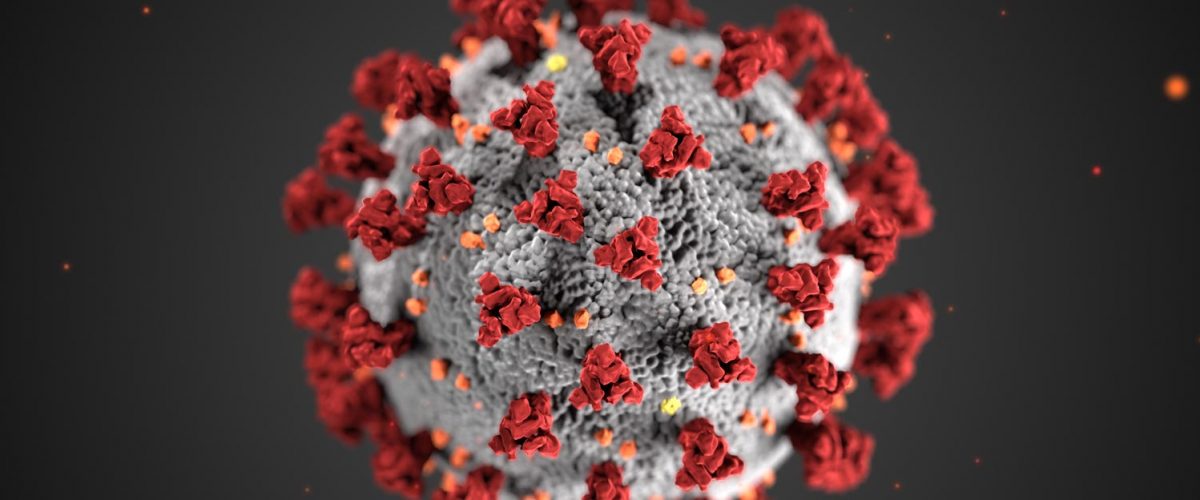
The proteins on the surface look like a crown, as in coronation
As is true for influenza, illness caused by COVID-19 can range from very mild to severe.  So why are we more worried about it than we are about seasonal flu?

The answer lies in part of the original name - before COVID-19 was adopted.  It was called "novel" coronavirus. Novel doesn't mean the virus likes to read fiction, any more than the "corona" part of the name means it's connected to Corona beer.
Novel means new. Not new in the big scheme of things. New to humans, after making the leap from an animal species.
How can that cause so much trouble?
It means that it is new to our immune systems.

Let's say we take a group of 100 people who are well, put them in a room, and then add a person with seasonal influenza. That person can spread the flu virus to the others in the room. But not so easily. Each time a person who comes into contact - of the sort that lends itself to transmission - with the infected "index case," either of two things can happen. The new contact gets infected, and experiences illness.

Alternatively, if the new contact has some immunity, through vaccination against, or previous infection with, the same or closely related flu strains, the new contact will most likely not get sick, and will not be a source of contagion that - like the index case - threatens everyone else in the room.

The presence of immunity among people in the room means person-to-person spread will be limited. Thus, what epidemiologists call the "attack rate" will be reduced. (This is what epidemiologists sometimes call "herd immunity.")

Now, take the same group of 100 well people and add a person sick (even very mildly) with COVID-19. Nobody else in the room has any immunity, because this is a "novel" virus. So person-to-person transmission happens much more readily, and thus the "attack rate" will be much higher.

So we can see that even if COVID-19 is no worse than seasonal flu in the average person, the "novel" attribute enables it to spread quickly to a large number of people. And that really matters, because a certain percentage of people who get infected will die. That is called the "case fatality" rate. No matter what the case fatality rate is, the more people who get infected, the more will die.

Right now we aren't really sure how the case fatality rate compares with seasonal influenza. We just don't have enough population data yet, and that makes it a moving target.

But there is reason to be concerned that it will be significantly higher than for seasonal flu. Again, this is because of the "novel" attribute.

It is believed that one of the reasons the Spanish Flu of a century ago, a novel strain, killed so many people - and especially so many young and previously healthy people - has to do with the immune response. If you have been exposed to other viruses that are similar, you will have a little bit of immunity. This helps in two ways. First, your immune system is at least a little "primed" to respond. Second, some of the immune system's response will be to produce partially-matching antibodies that can act as "blocking" antibodies that lessen the intensity of the overall immune response. And this is actually a good thing.

Why? Because a good bit of the effect of the virus on your body - especially on the respiratory tract - is the result not so much of the virus itself but the inflammatory aspects of the immune response. The "blocking antibody" effect can lessen the severity of the inflammation. You don't get that when you're infected by a novel virus. Since young, healthy people typically have the most intense immune response to any infectious agent, the lack of a "blocking antibody" effect means they can get very sick very quickly. Paradoxically, then, their risk of becoming seriously ill or dying may not be that much lower than it is for the elderly and infirm.

What does all this mean? If we start to see evidence of rapid "community spread" - and there is reason to think we will - the attack rate will be high, the number of cases will be high, and the number of deaths will be high.

So pay attention to all the advice you're getting from reliable sources on how to limit contagion.

For my entire career I have been telling patients and families who ask me how to avoid spreading an infectious disease from the "index case" in the family: "Lots of hand washing." This applies to everything from "pinkeye" to the common cold to influenza. And now to COVID-19.

Wash your hands!

Thursday, January 16, 2020

The Politics of Blame

Over the last couple of debates, as I've been watching Amy Klobuchar and have been mostly impressed with her performance - notwithstanding her calling Medicare for All a "pipe dream" - I have been aware that I have had reservations about her since last summer because of something she said in a debate. And it didn't have anything to do with her policy positions being "pragmatic" instead of "progressive."

No, it was something she said to which I recall having had an immediate, personal, visceral reaction. And today, having watched the last debate before the Iowa caucuses, earlier this week, I tried to remember what it was.

So I searched my memory, and then Google. It was something she said that reflected on my profession and my specialty. It was about addiction to opioids. And it wasn't in response to a question on that topic. It was the lead in her closing statement - a part of the debate when viewers tend to listen very closely.


After thanking the city of Detroit for hosting the July 30 debate, she said:

"To win, we have to listen to people. And out there today is Casey Jo's mom. Casey Jo was a champion high school swimmer from a small town. She got sick, went to the emergency room, and got hooked on opioids. The last thing that she said to her mom was, "Mama, it's not my fault."  And she died."

To be fair, Senator Klobuchar did blame pharma, but that seemed to me an afterthought, probably because she led with "the emergency room." And we all know that what you lead with gets the most attention.

And the way she related it?

"She got sick, went to the emergency room, and got hooked on opioids."

I can tell you this: in emergency medicine we don't typically prescribe opioids for "sick," unless "sick" is terminal cancer with spread to places where it causes severe pain, or maybe kidney stones. And broken bones, which are not "sick."

I am fed up with people blaming emergency physicians for opioid addiction. There are studies that show even an initial, very limited Rx for opioids can put some people at risk for addiction. My colleagues and I know this, and we are judicious in prescribing. The percentage of all Rx pain killers prescribed by doctors in my specialty is tiny - and getting smaller all the time.

How sensitive are we to this issue? I'll tell you how sensitive.

In September of 2018 I fell and broke ribs. I knew I had broken ribs the moment I picked myself up off the floor, because I know anatomy and patterns of injury. And my diagnosis was confirmed by the fact that the area was very painful with breathing or movement of my torso and stayed that way for 6 weeks.

Guess what I didn't do? I didn't go to the hospital. I didn't need x-rays to make the diagnosis, and I knew no one would treat my severe pain with a prescription for a narcotic pain reliever. The cowboy in me would have to "walk it off." That's fine when you're walking, but I didn't get a decent night's sleep for over a month.

You read that paragraph right: I knew no one would prescribe a narcotic pain reliever for one of their own. That is how sensitive we are to the risk of addiction.

Yet Senator Klobuchar led her closing statement by talking about opioid addiction, and said it happens in the emergency room, to people who go there because they are "sick."

She's not my first (or second) choice, but I think Amy Klobuchar would make a fine president for this nation. I hope and trust that she would have smarter people advising her on matters of policy and how to frame them in her public speaking.

Tuesday, October 8, 2019

The Social Contract: A Concept Whose Time Has Gone - or Returned?

Two and a half centuries ago the French political philosopher Jean-Jacques Rousseau wrote a book called Du contrat social ou Principes du droit politique, translated (roughly) into English as The Social Contract.  Rousseau was one of several theorists who formulated ideas about the relationships among members of a society, and especially between society and the individual, during the European Enlightenment.  Along with Rousseau, Thomas Hobbes and John Locke were powerfully influential in the thinking of America's Founding Fathers and the Framers of the Constitution.


The idea of the social contract was advanced to provide the philosophical foundation for the governance of a nation: it is a framework upon which to build the relationship between the State and the individual, and a key to understanding the basis for members of a society choosing to act collectively through the State, deciding in what ways the interests of the individual should be made subordinate to those of society as a whole in order to benefit everyone.

Throughout American history the social contract has been the focus of tension between the State, which has been given agency to act for society's collective interests, and the individual.  This tension exists largely because of the traditional American emphasis on rugged individualism and personal responsibility.

The belief in rugged individualism often runs afoul of the limitations imposed by nature upon human beings.  There are many things people cannot accomplish without reliance upon their neighbors.  Sometimes this is because a single person is physically incapable of carrying out a task without assistance.  Commonly it is because it is necessary to bring to bear upon a project resources that are not, or even cannot be, possessed or controlled by one person or a small group.

On a small scale at the community level, this can be observed in the building of a house or the raising of a barn by the Amish in rural Pennsylvania or Ohio.


In a more "modern" context, the design and construction of a children's playground in suburbia may bring together adults from the community who contribute volunteer labor and seek donations of construction materials from local businesses.


Of course there are many things we need to do that require collective effort on a much larger scale.  The Interstate Highway System is a favorite example.  Many of us never learned, or learned and forgot, that in the early decades of our republic, there were strenuous disagreements about what government could or should undertake in the way of large-scale projects.  "Internal improvements" such as the construction of roads and canals were considered the domain of state governments, and there was only grudging acceptance of the notion that the national government should get involved in interstate projects.

For a long time I believed the question of how expansive should be the role of government, acting as agent for American society, was settled when the USA embraced the "American System" advanced by the early 19th-Century American Whig Party (the forerunner of the mid-Century Republican Party).  The American System relied for revenue on tariffs, which simultaneously protected American agriculture and manufacturing from European competition, establishment of a national bank to facilitate commerce, and a system of internal improvements (the above mentioned roads and canals) to enable transportation of goods and speed the development of a national mercantile network.

This past weekend I came across stunning evidence that what I had begun to suspect was the abandonment of the social contract was really happening.  An essay was published in the NY Times about a community in rural Arkansas in which there was a backlash against spending money on a new library and a librarian well qualified to run it.  I'm hoping you'll read it, so I am not going to spoil it for you.  I'll just say that it reminded me of how my community library was a place of refuge in my youth, and the writer's account gave me a sense of deep sorrow about where American society is going.

This photo is from a piece about the best places to live in Arkansas.
A community that doesn't want to pay for a library would not make my list.
The essence of the story is that people don't want to pay taxes for anything that will not benefit them directly.  Many years ago I was challenged to overcome that resistance by the need for a new recreational facility in a development whose homeowners' association I served as president for 13 years.  The frustrations of getting people to understand the concept of community were endless.

On a truly national scale I see the same tensions now.  They rise up between those who believe access to basic healthcare is a universal human right, and those who reject that idea.  I see it in the conflict between Americans who recognize that we have long used public dollars to finance a level of education that prepares young people to compete for good jobs, and realize a high school education falls short, and those who had no help paying for college for themselves or their children and are damned if they are going to help anyone else.

I also see it in the strenuous disagreements between people who believe we should act through the agency of the state to ameliorate poverty, and those who believe only private charity should have that responsibility - because unlike government, private charity can sort out the deserving from the undeserving poor - even though private charity has never had the resources to address poverty on a national scale.  Accompanying that fundamental disagreement is the matter of turning a blind eye to the central inadequacy of a private-charity approach to solving social problems: it allows the well-to-do yet selfish among us to contribute nothing to the effort.

Two centuries after Rousseau and the other enlightenment political philosophers, John Rawls came along as the seminal American thinker and writer on issues in social justice.  Rawls seeks to answer the fundamental question of what kind of a society we should be building to try to make American life fair.  In his work A Theory of Justice (1971, revised in 1999), Rawls develops the concept of "justice as fairness," and he explores at great length how members of a society can go about developing consensus on the principles that should govern the way our social structures operate.

Nowadays the phrase "social justice" has been disparaged by those who cling to what I assert is the myth of rugged individualism and the belief that one can pull oneself up by one's own bootstraps.  (Giving just a moment's thought to this metaphor reveals the absurdity of it: bootstraps can be used to pull on a pair of boots, but certainly not to elevate one's position, either bodily or socioeconomically.)

I am cautiously optimistic that the presidential elections of 2016 and 2020 will serve to get more Americans thinking about just what our theory of justice should be.  When I look at the civil rights and great society efforts of the 1960s, and the fires burning at the center of today's Progressive movement, I find hope that we might emerge from the dark passage we have been in since the "me decade" of the 1980s - and once more discover that not only is there room in America for justice as fairness, but that is really what America must embody as its most important ideal.