It isn't my usual approach to give away the conclusion in the title, because I like to keep readers in suspense, but ever since the derisive epithet "Faux News" was invented I have found it objectionable.
My first objection was that "faux" is a French word, and its correct pronunciation, even in English, is "f" followed by long "o" (rhymes with "doe"). Pronouncing "faux" so it sounds anything like "fox" is something people should do only when they are making fun of those who pronounce everything French in a way that I would describe as an illiterate Americanization. But I digress.
Regular readers know that I enjoy taking the news media to task for sloppy reporting, and I am sometimes harsh in my criticism. There are organizations that have set themselves up to be critics of the media, and I must say I find no small irony in their existence. From the left we have Media Matters, which criticizes news reporting perceived as having a right-wing bias. And from the right we have the Media Research Center, which criticizes news reporting perceived as having a left-wing bias.
We all have biases, unique perspectives, and opinions. Most of us recognize that we should try to separate opinion from fact. Sometimes this can be challenging. When I first heard lawyers speak of "true facts," I thought it an absurd redundancy, but then I realized it was an admission that the truth of claims set forth as facts is sometimes not straightforward. Daniel Patrick Moynihan, the late U.S. Senator from New York, is credited with having made the observation that we are all entitled to our own opinions, but we are not all entitled to our own facts.
On a clear day the sky is blue, and that appearance is caused by the way sunlight is scattered by water vapor in the air. Few people (I hope) would argue the factual nature of this statement. On the other hand, a statement to the effect that this summer in Pittsburgh, Pennsylvania has been unpleasantly hot should be regarded as a matter of opinion, regardless of what percentage of Pittsburghers surveyed might agree with it.
When it comes to public affairs, lines between opinion and fact are often not so clear. For many years Walter Cronkite concluded the evening newscast on CBS with the trademark line, "And that's the way it is..." (typically followed by the day's date, because the way it is today isn't necessarily the way ... well, you get the idea). Had I been a bit more inclined to question the authority of "the most trusted man in America," I might have said, "Oh, yeah? Says you." But I didn't.
As the years have gone by, Americans have been increasingly disposed to doubt the accuracy and objectivity of news reporting. In 1980 Ted Turner founded a cable news network with that as its name, abbreviated as CNN. Some to the right on the political spectrum thought the network lacked objectivity and editorialized (with a decidedly liberal slant) within its news reporting. There was a perception that CNN reflected the biases of its founder, as Turner was widely viewed as having leftist leanings. In the early 90s some Republicans began derisively referring to CNN as the Clinton News Network because it seemed to report the news in a way so favorable to the Administration. Many thought it was time for some competition, and Australian media mogul Rupert Murdoch's News Corporation obliged in 1996 by launching the Fox News Channel. Unlike CNN, News Corp said, FNC would report the news in a way that would be "fair and balanced." Further, on Fox News the reporting of "straight news" and the programs featuring analysis and opinion would be clearly separated. There would be no editorializing in the straight news reporting, and the analysis and opinion segments and shows would include voices from the right in proportions far exceeding the token conservative one might (infrequently) find on CNN. Finally, in reporting of straight news, FNC insisted that different people had different views of the facts, so Fox would tell its audience what those different views were and let them decide for themselves which were the "true facts," so to speak. "We report ... you decide" was the tagline.
It's this last aspect of the FNC approach that some find unacceptable. Facts are facts, and people who disagree with the facts should not have their opinions reported as being equally legitimate. Perhaps I should illustrate with an example.
Let's use climate change. There's a nice controversial subject for you. The CNN approach is to tell you that the vast majority of climate scientists say the earth is getting warmer, that it's getting warmer faster than ever before in our planet's history, and human activity is largely to blame. If you watch enough coverage of this issue on CNN you may catch mention of the fact that there is a vocal minority of scientists who differ, but you could easily miss that, and that perspective is presented as an outlier barely worth acknowledging. On FNC, on the other hand, both perspectives are presented, with equal weight (and time) given to presentation of the bases of these diverging opinions. You may even find a suggestion that climate scientists who disagree with the majority view are not quite as tiny a minority as we've been led to believe, because many are afraid of being shunned (loss of research grant funding, among other possible repercussions) if they declare themselves skeptics.
Viewers who prefer the CNN approach say there is a strong consensus of scientific opinion, and it is irresponsible journalism to be "fair and balanced" by giving equal weight to a kooky minority view. Those who like Fox say that's exactly what's wrong with CNN: that network decides what is "kooky" based on whether it does or does not serve the political purposes of the "liberal establishment," and they tell their audience that the kooks are not entitled to their own facts.
There are some who think CNN is well left of center in its reporting, while Fox is squarely middle of the road. I'm not one of them. First, FNC's analysis and opinion segments and shows are overwhelmingly conservative in their orientation. Second, their straight news coverage features reporters and anchors who ask more pointed and challenging questions of interviewees and guests who are Democrats or seem to have viewpoints from the left of center than they do of conservatives. Third, the commercial success of FNC has not been lost on those running the business that is CNN, and Fox has forced CNN notably to the right. Now, when CNN's reporters are interviewing guests whose perspective seems to be coming from the right, their hard questioning is more respectful, and the skepticism with which the answers are greeted is more subtle. And there is less blatant editorializing within the reporting of straight news. The analysis and opinion are still overwhelmingly liberal, but that's OK, because it's analysis and opinion.
If you want criticism from the left, go to the Web site of Media Matters, and for the opposite perspective the Media Research Center will suit you just fine. But is there anyone providing a critique that's right down the middle?
(Just in case you were hoping, based on the name of my blog, no, I'm not going to claim that I am the ultimate, objective arbiter of who is doing things right in news reporting and who isn't. You are free to reach that conclusion, however. Now give me a minute to extract tongue from cheek.)
Remember the 2010 election? It didn't go well for the national Democratic party. So some savvy folks at the University of Maryland decided to explore the possibility that the U.S. Supreme Court's decision in the Citizens United case, and any number of other influences, may have flooded the American electorate with "information" of doubtful quality. Note the way I introduced this study, connecting it with the outcome of the election rather than presenting it as a matter of pure intellectual inquiry, thereby suggesting that those conducting it may have had a political agenda. Not to worry: I shall find a yardstick and rap my own knuckles for doing that.
The study is called, "Misinformation and the 2010 Election: A Study of the U.S. Electorate." The purpose of the study was to examine where voters were getting their information, what the voters themselves thought about the quality of the information available to them, and whether some sources of information were associated more than others with creating a "misinformed" electorate.
If I were to scrutinize the methods, the results, and the conclusions (interpretation of the results) in detail, the way I would if we were reviewing a paper from a medical journal at my teaching hospital, this essay would go on so much longer that those of you who are still with me would soon not be. So let me summarize: conservatives are more misinformed than liberals, and those who watch Fox News are more misinformed than those who get their news from other sources. Further, the more they rely on Fox News and the less they sample other sources, the more misinformed they are.
Voters were asked questions about economic stimulus and its effects on jobs; health care reform; the state of the economy; climate change; the Troubled Assets Relief Program (TARP, also known as the bank bailout); the bailout of GM and Chrysler; whether the income tax burden on the middle class is getting better or worse; the war in Afghanistan; and the "birther" controversy over the president's origins.
The investigators tried to tease apart voters' own personal views from what they understood to be generally accepted facts. But this is challenging at best. Let us take, as an example, the question of whether the Obama Administration's economic stimulus package "saved or created millions of jobs." If voters thought otherwise, they were misinformed. So how was that question phrased?
"Is it your impression that most economists who have studied it estimate that the stimulus legislation ... (a) saved or created several million jobs; (b) saved or created a few jobs; or (c) caused job losses?"
I consider myself to be a well-informed voter, and that's more than a matter of intellectual egotism. I read a lot and seek out a wide variety of news sources. I remember reading that the Congressional Budget Office issued a sanguine estimate of the effect of the American Recovery and Reinvestment Act on job creation. But I also remember thinking the phrase "saved or created" was itself created to facilitate optimistic claims, and I certainly never assumed that the CBO's estimate was based on the carefully considered opinions of "most economists who have studied" the question.
So, assuming I do not wish to answer the question by saying "I don't know," I might choose (a) because I think that's the answer they're looking for even though I am deeply skeptical. Or I might choose (b) because I think economists tend to be realists or even pessimists (remember, they call economics "the dismal science"). Or I might choose (c) because I think little the government does has the intended salutary effect, and economists are surely smart enough to figure this out.
How do you think I will answer the question if I am a conservative or a Fox News viewer (two subsets of respondents to the survey with, I would guess, substantial overlap)? Right. I'm misinformed.
This is just one example. But most (not all) of the questions on the survey, subjected to close analysis, would tend to lead to a similar result and conclusion.
Fox News has its detractors, and some of the points they make are legitimate. We should get our news about public affairs from a variety of sources. If we gravitate toward sources that are full of opinions that mostly agree with our own, we may stay in a comfort zone, but we are less likely to be well informed - and much less likely to understand divergent views.
The study from the University of Maryland has been cited by many who dislike Fox and believe (1) conservatives are dimwitted; (2) conservatives watch Fox News, which keeps them misinformed; (3) conservatives won't watch anything else, because they do not wish to be enlightened. Some of FNC's detractors believe most or all of what Fox News does is an unconscionable breach of journalistic ethics, and FNC should be forced off the cable systems. At least until they remember the meaning of the First Amendment.
Here's what I believe. Fox News is reactionary. It is a reaction to the perception that for decades the news media have been populated chiefly by people whose political ideology is clearly left of center and who have been a good deal less than successful in keeping their ideological biases from affecting the way they report the news. Sit with me at home as I watch CNN or read the news on CNN.com, in my car as I listen to NPR, or anywhere as I read the articles linked from my daily e-mails from the New York Times. I will be happy to point out countless examples. Well, not countless. We can count them. The number will be large.
And that is why Fox News exists.
Thursday, August 2, 2012


Friday, July 27, 2012
Is Romney a Wazzock?
It is, for me, always a delight to learn a new word.
 The news media on both sides of the pond have been full of stories about impolitic things said by U.S. presidential candidate Mitt Romney concerning the 2012 Olympics being held in London. Romney has been traveling overseas in an effort to demonstrate that he is comfortable with international relations.
Although Americans have consistently shown that they are far more concerned about the domestic economy than anything else (recall the 1992 Clinton tag line, "It's the economy, stupid!"), especially when the economy isn't doing so well, we do expect a president to have some foreign policy "credentials," and without them we worry that our head of state might be viewed as a bumbling twit by our allies or as having exploitable weaknesses by our enemies.
Recently Mitt Romney has been on a trip labeled with one of my favorite oxymoronic terms in electoral politics: a "charm offensive." The objective is to get foreign leaders to take a liking to him and say nice things about him. This is important, because one of the major advantages President Obama has over Romney (or anyone else) is that he is well-liked in the international community, and has been since his candidacy in 2008. One may question how useful those sentiments have been to American foreign policy endeavors, but intuition suggests it can't hurt.
So why on earth would Romney question anything about the London Olympics, except perhaps how many medals Michael Phelps might add to his collection? To suggest that there might be something imperfect about security measures that have been implemented, or worse - much worse - that Londoners may not enthusiastically embrace their role as hosts of the Games cannot do anything but alienate the people he is trying to impress.
Referring to Romney's "charm offensive," a British newspaper called him "offensive" and said he was "devoid of charm." And then the word that caught my eye: the writer for the Daily Mail who thus criticized Romney also said he is a "wazzock."
 From 1966 to 1999 William F. Buckley had a television program called "Firing Line," full of spirited intellectual discussion of what would now be called "hot topics" in public affairs. Beginning in 1971 this program was an hour long and ran on PBS, and nary an episode was missed in my household. One of the things I really liked about the show was that Buckley was very attentive to the careful selection of words and had an impressive vocabulary. He would never choose a word familiar to his viewers if there was an unfamiliar one that meant exactly what he wanted to say. And so he sent me scurrying to the dictionary quite often.
I suspected "wazzock" was the sort of word I might find in my copy of Samuel Johnson's dictionary of insults, but for the sake of convenience I first consulted the New Oxford American Dictionary that resides in my Mac. The meaning: a stupid, annoying person. Origin 1980s, informal, British. Not very satisfying, but likely correct. When I consulted my mini-OED (the New Shorter Oxford English Dictionary, a wonderful compromise for those who cannot or will not commit to the many-volumed full-fledged OED), which has a publication date of 1993, there it was, with the same definition, and the notation "origin unknown." My older dictionaries had no "wazzock." Oddly enough, neither did the latest edition of the American Heritage Dictionary of the English Language, published in 2000. (Even their online version came up empty.) So "wazzock" is apparently not part of British slang that has caught the attention of American lexicographers.
Surely this means that an American wazzock would not grasp the insult, at least not without consulting the right dictionary. No doubt the writer for the Daily Mail knew this and liked the sense of irony.
But does the insult fit? Romney headed up the operations of the Olympics when the games were held in Salt Lake City. Surely he thinks he, and everyone who worked with him, did a great job. He may even think they did a better job than anyone else ever had or ever will. He clearly is a believer in "American exceptionalism." His 2010 book is titled No Apology: The Case for American Greatness. A good friend of mine recently posted a quotation from the book online:

Although Americans have consistently shown that they are far more concerned about the domestic economy than anything else (recall the 1992 Clinton tag line, "It's the economy, stupid!"), especially when the economy isn't doing so well, we do expect a president to have some foreign policy "credentials," and without them we worry that our head of state might be viewed as a bumbling twit by our allies or as having exploitable weaknesses by our enemies.
Recently Mitt Romney has been on a trip labeled with one of my favorite oxymoronic terms in electoral politics: a "charm offensive." The objective is to get foreign leaders to take a liking to him and say nice things about him. This is important, because one of the major advantages President Obama has over Romney (or anyone else) is that he is well-liked in the international community, and has been since his candidacy in 2008. One may question how useful those sentiments have been to American foreign policy endeavors, but intuition suggests it can't hurt.
So why on earth would Romney question anything about the London Olympics, except perhaps how many medals Michael Phelps might add to his collection? To suggest that there might be something imperfect about security measures that have been implemented, or worse - much worse - that Londoners may not enthusiastically embrace their role as hosts of the Games cannot do anything but alienate the people he is trying to impress.
Referring to Romney's "charm offensive," a British newspaper called him "offensive" and said he was "devoid of charm." And then the word that caught my eye: the writer for the Daily Mail who thus criticized Romney also said he is a "wazzock."
From 1966 to 1999 William F. Buckley had a television program called "Firing Line," full of spirited intellectual discussion of what would now be called "hot topics" in public affairs. Beginning in 1971 this program was an hour long and ran on PBS, and nary an episode was missed in my household. One of the things I really liked about the show was that Buckley was very attentive to the careful selection of words and had an impressive vocabulary. He would never choose a word familiar to his viewers if there was an unfamiliar one that meant exactly what he wanted to say. And so he sent me scurrying to the dictionary quite often.I suspected "wazzock" was the sort of word I might find in my copy of Samuel Johnson's dictionary of insults, but for the sake of convenience I first consulted the New Oxford American Dictionary that resides in my Mac. The meaning: a stupid, annoying person. Origin 1980s, informal, British. Not very satisfying, but likely correct. When I consulted my mini-OED (the New Shorter Oxford English Dictionary, a wonderful compromise for those who cannot or will not commit to the many-volumed full-fledged OED), which has a publication date of 1993, there it was, with the same definition, and the notation "origin unknown." My older dictionaries had no "wazzock." Oddly enough, neither did the latest edition of the American Heritage Dictionary of the English Language, published in 2000. (Even their online version came up empty.) So "wazzock" is apparently not part of British slang that has caught the attention of American lexicographers.
Surely this means that an American wazzock would not grasp the insult, at least not without consulting the right dictionary. No doubt the writer for the Daily Mail knew this and liked the sense of irony.
But does the insult fit? Romney headed up the operations of the Olympics when the games were held in Salt Lake City. Surely he thinks he, and everyone who worked with him, did a great job. He may even think they did a better job than anyone else ever had or ever will. He clearly is a believer in "American exceptionalism." His 2010 book is titled No Apology: The Case for American Greatness. A good friend of mine recently posted a quotation from the book online:
England is just a small island. Its roads and houses are small. With few exceptions, it doesn’t make things that people in the rest of the world want to buy. And if it hadn’t been separated from the continent by water, it almost certainly would have been lost to Hitler’s ambitions.
Romney believes the United States of America is the greatest country in the world. Fine. So do most of the people who live here. (If you want a citation, too bad. I just made that up, and I think it's an accurate appraisal of public opinion, but I have no survey data to support it.)
But this is truly a gaffe. Why would he say such things about the Brits when he is supposed to be on a "charm offensive?" I'm afraid the answer is self-evident: he is a wazzock.
Friday, July 6, 2012
The ACA Survives the Challenge; Now What?
Unless you've been hiding under a rock - a really big rock - you now know that the Patient Protection and Affordable Care Act (the ACA) has (mostly) survived judicial review. The "mostly" part of that statement is important, as we shall see.
The centerpiece of the challenge to the ACA's constitutionality was the contention that the individual mandate to purchase health insurance is an exercise of congressional power that exceeds congressional authority.
Absent any claim to being a constitutional scholar - I do not even play one on TV - last August I briefly outlined the arguments that Congress was exceeding its authority under its enumerated or implied powers to regulate interstate commerce or provide for the general welfare (8/19/11):
http://bobsolomon.blogspot.com/2011/08/thou-art-commanded-buy-health-insurance.html
At the risk of substantially oversimplifying matters, I might say the Court reached much the same conclusion. Then, however, notwithstanding the plain language of the statute, the Court upheld the ACA based on the notion that the requirement that everyone purchase health insurance is not a regulatory mandate with a penalty for noncompliance (which would exceed the constitutional authority of Congress) but rather a tax. And the power of Congress to tax and spend (to "provide for the ... general Welfare") is essentially unlimited.
(In between the Court's pronouncement that Congress had no authority to do this one way and its further pronouncement that Congress could - and did - do it another way, major news outlets jumped the gun - in the middle of the explication by Chief Justice John Roberts - and announced that the ACA had been struck down, thereby making complete fools of themselves.)
I will not recount here what I view as the tortured logic of the majority opinion declaring it a tax or the incisive and compelling logic of the dissent on that point. (I do, however, commend both to you for your reading pleasure, or at least your enlightenment - although Scalia's opinions are, more often than not, reading pleasure for me, even when I disagree with them). I will merely point out what I consider to be a common-sense view. When you tell people who are not doing something that they must do it or pay a fine, that is a regulatory mandate with a penalty. When people are engaging in an activity - typically involving goods, services, or money changing hands - and you estimate the value and exact a payment in relation to that value, then that is a tax. In other words, inactivity can be forcibly replaced by activity through a mandate, while activity can be taxed. So, contrary to the language of the ACA itself, which many times describes a mandate of activity (purchasing health insurance) and a penalty for inactivity (failure to purchase), the Court has decided the penalty is a tax, as if the government were taxing inactivity.
Perhaps you have no interest in reading the majority opinion or the dissent. Perhaps all you want is to know that the Court has upheld the individual mandate, and you think it really matters not a whit whether the decision passes your personal logic test (or mine, for that matter). The Supreme Court has the final word on that point, unless you want to disagree with Chief Justice John Marshall's Doctrine of Judicial Review, and then you're really going off on your own. Fair enough. That brings us to the "Now What?" part of the title.
It is possible that the Congress will repeal the ACA. As you surely know, that would require the same thing the Act's original passage required: majority votes in both houses - and, as practical matter, because of the filibuster/cloture stuff that goes on in the Senate, a sixty-vote majority (instead of 51) there. Given that not a single pundit I've come across thinks the Republicans are going to have 60 senators next January, repeal seems exceedingly unlikely. Oh, and by the way, if President Obama is reelected, it would take a veto-proof majority of two thirds in each chamber, and you know what they say about flying pigs.
So the ACA is here to stay. (No rhyme intended, and if you like the sound of that, please don't start chanting it.) What, then, are the other implications of the Court's decision for the effect of the Act?
As you know if you are a regular reader, I think we need universal health insurance coverage in the United States, and I have been critical of the ACA because it really doesn't get us there. We have some 50 million uninsured people in this country. The ACA as enacted held out the promise of reducing that by about two thirds. Thirty-some million folks would be added to the rolls of the insured. Short of the goal of universal coverage, yes, but nevertheless welcome progress if it panned out. However, the Court has tossed a bit of a monkey wrench into the works. You see, about half of the newly insured were going to be covered not by health insurance they bought in response to the mandate but by expansion of Medicaid, the joint federal-state health insurance program for the poor.
That is enough of a problem in and of itself, because Medicaid is not "real insurance," as I've explained before and will come back to in a bit. But now the Court has said Congress does not have the leverage included in the ACA to get the states, which administer Medicaid, to add all those people to its rolls. Under the provisions of the ACA, states that didn't expand Medicaid as required by the Act would lose all of their federal Medicaid funding. But the Court said no, Congress cannot do that.
And now some states have already said they will not expand Medicaid coverage as envisioned by the ACA, with more announcements to that effect predicted. Depending on how many states decide they just cannot afford to expand Medicaid coverage, even with a substantial initial infusion of federal tax dollars, this could put a serious damper on the ACA's effect in reducing the number of uninsured. Today on NPR commentators noted the claim by some state officials that this is dauntingly expensive, and voluntarily expanding Medicaid coverage would be like booking passage on the Titanic.
And so it appears there may be millions who would have been newly covered by Medicaid under the ACA who will remain uninsured, unless Congress comes up with a different solution for them.
What about those who do become new Medicaid recipients? That brings us back to the problem mentioned earlier, that Medicaid is not "real insurance." You see, what Medicaid pays to the providers of health care services (doctors and hospitals, among others) is far less than what is paid by private health insurance. Therefore, many doctors will not accept Medicaid patients into their practices. In some states Medicaid pays so poorly that Medicaid recipients have tremendous difficulty finding doctors to treat them anywhere but the one place where the answer is always yes: the emergency department.
When the disparity between access to care for Medicaid recipients and those with private insurance is large, because Medicaid pays poorly, that violates the "equal access" provision of the federal statute underlying the program, and states where that is the case are supposed to be forced to pay better and narrow the gap. Who has the responsibility for enforcing the "equal access" provision? The Department of Health & Human Services (HHS). And who is failing to enforce this provision, so that equal access continues to be a distant dream for those on Medicaid? That's right: HHS.
In many states Medicaid programs have been moving in the opposite direction, narrowing coverage and cutting payments to providers. And so the improvement in access to care envisioned by the ACA is in serious jeopardy, notwithstanding the Supreme Court's decision to uphold the individual mandate.
Surely the ACA may have the effect of reducing the numbers of uninsured by a substantial proportion. I fear, however, that far from the dramatic improvement promised by the Act's proponents, it may ultimately prove to be more incrementalism that falls well short of the goal. And then Congress will be where it really doesn't want to be: back at the drawing board.
The centerpiece of the challenge to the ACA's constitutionality was the contention that the individual mandate to purchase health insurance is an exercise of congressional power that exceeds congressional authority.
Absent any claim to being a constitutional scholar - I do not even play one on TV - last August I briefly outlined the arguments that Congress was exceeding its authority under its enumerated or implied powers to regulate interstate commerce or provide for the general welfare (8/19/11):
http://bobsolomon.blogspot.com/2011/08/thou-art-commanded-buy-health-insurance.html
At the risk of substantially oversimplifying matters, I might say the Court reached much the same conclusion. Then, however, notwithstanding the plain language of the statute, the Court upheld the ACA based on the notion that the requirement that everyone purchase health insurance is not a regulatory mandate with a penalty for noncompliance (which would exceed the constitutional authority of Congress) but rather a tax. And the power of Congress to tax and spend (to "provide for the ... general Welfare") is essentially unlimited.
(In between the Court's pronouncement that Congress had no authority to do this one way and its further pronouncement that Congress could - and did - do it another way, major news outlets jumped the gun - in the middle of the explication by Chief Justice John Roberts - and announced that the ACA had been struck down, thereby making complete fools of themselves.)
I will not recount here what I view as the tortured logic of the majority opinion declaring it a tax or the incisive and compelling logic of the dissent on that point. (I do, however, commend both to you for your reading pleasure, or at least your enlightenment - although Scalia's opinions are, more often than not, reading pleasure for me, even when I disagree with them). I will merely point out what I consider to be a common-sense view. When you tell people who are not doing something that they must do it or pay a fine, that is a regulatory mandate with a penalty. When people are engaging in an activity - typically involving goods, services, or money changing hands - and you estimate the value and exact a payment in relation to that value, then that is a tax. In other words, inactivity can be forcibly replaced by activity through a mandate, while activity can be taxed. So, contrary to the language of the ACA itself, which many times describes a mandate of activity (purchasing health insurance) and a penalty for inactivity (failure to purchase), the Court has decided the penalty is a tax, as if the government were taxing inactivity.
Perhaps you have no interest in reading the majority opinion or the dissent. Perhaps all you want is to know that the Court has upheld the individual mandate, and you think it really matters not a whit whether the decision passes your personal logic test (or mine, for that matter). The Supreme Court has the final word on that point, unless you want to disagree with Chief Justice John Marshall's Doctrine of Judicial Review, and then you're really going off on your own. Fair enough. That brings us to the "Now What?" part of the title.
It is possible that the Congress will repeal the ACA. As you surely know, that would require the same thing the Act's original passage required: majority votes in both houses - and, as practical matter, because of the filibuster/cloture stuff that goes on in the Senate, a sixty-vote majority (instead of 51) there. Given that not a single pundit I've come across thinks the Republicans are going to have 60 senators next January, repeal seems exceedingly unlikely. Oh, and by the way, if President Obama is reelected, it would take a veto-proof majority of two thirds in each chamber, and you know what they say about flying pigs.
So the ACA is here to stay. (No rhyme intended, and if you like the sound of that, please don't start chanting it.) What, then, are the other implications of the Court's decision for the effect of the Act?
As you know if you are a regular reader, I think we need universal health insurance coverage in the United States, and I have been critical of the ACA because it really doesn't get us there. We have some 50 million uninsured people in this country. The ACA as enacted held out the promise of reducing that by about two thirds. Thirty-some million folks would be added to the rolls of the insured. Short of the goal of universal coverage, yes, but nevertheless welcome progress if it panned out. However, the Court has tossed a bit of a monkey wrench into the works. You see, about half of the newly insured were going to be covered not by health insurance they bought in response to the mandate but by expansion of Medicaid, the joint federal-state health insurance program for the poor.
That is enough of a problem in and of itself, because Medicaid is not "real insurance," as I've explained before and will come back to in a bit. But now the Court has said Congress does not have the leverage included in the ACA to get the states, which administer Medicaid, to add all those people to its rolls. Under the provisions of the ACA, states that didn't expand Medicaid as required by the Act would lose all of their federal Medicaid funding. But the Court said no, Congress cannot do that.
And now some states have already said they will not expand Medicaid coverage as envisioned by the ACA, with more announcements to that effect predicted. Depending on how many states decide they just cannot afford to expand Medicaid coverage, even with a substantial initial infusion of federal tax dollars, this could put a serious damper on the ACA's effect in reducing the number of uninsured. Today on NPR commentators noted the claim by some state officials that this is dauntingly expensive, and voluntarily expanding Medicaid coverage would be like booking passage on the Titanic.
And so it appears there may be millions who would have been newly covered by Medicaid under the ACA who will remain uninsured, unless Congress comes up with a different solution for them.
What about those who do become new Medicaid recipients? That brings us back to the problem mentioned earlier, that Medicaid is not "real insurance." You see, what Medicaid pays to the providers of health care services (doctors and hospitals, among others) is far less than what is paid by private health insurance. Therefore, many doctors will not accept Medicaid patients into their practices. In some states Medicaid pays so poorly that Medicaid recipients have tremendous difficulty finding doctors to treat them anywhere but the one place where the answer is always yes: the emergency department.
When the disparity between access to care for Medicaid recipients and those with private insurance is large, because Medicaid pays poorly, that violates the "equal access" provision of the federal statute underlying the program, and states where that is the case are supposed to be forced to pay better and narrow the gap. Who has the responsibility for enforcing the "equal access" provision? The Department of Health & Human Services (HHS). And who is failing to enforce this provision, so that equal access continues to be a distant dream for those on Medicaid? That's right: HHS.
In many states Medicaid programs have been moving in the opposite direction, narrowing coverage and cutting payments to providers. And so the improvement in access to care envisioned by the ACA is in serious jeopardy, notwithstanding the Supreme Court's decision to uphold the individual mandate.
Surely the ACA may have the effect of reducing the numbers of uninsured by a substantial proportion. I fear, however, that far from the dramatic improvement promised by the Act's proponents, it may ultimately prove to be more incrementalism that falls well short of the goal. And then Congress will be where it really doesn't want to be: back at the drawing board.
Tuesday, July 3, 2012
Should We Spank Our Children?
If you're a regular reader of this blog, you probably realize this essay may not tell you the answer to that question. You know that I often examine questions to which we do not really know the answer, and I am often more interested in how we try to answer the question than in the answer itself.
The pediatricians say no. They've been saying that for years. The August issue of Pediatrics, the official journal of the American Academy of Pediatrics, includes an article (just published online) telling us of an association between physical punishment (such as spanking) and subsequent diagnosis of mental illness. The story has already hit the popular press.
The authors used a database called the National Epidemiologic Survey on Alcohol and Related Conditions (NESARC) to discern an association between physical punishment during childhood and later being diagnosed with any of various mental illnesses, including depression and bipolar disorder, anxiety and panic disorder, post-traumatic stress disorder, substance (alcohol and other drug) abuse and dependence, and an array of personality disorders. They separated "harsh" physical punishment from more severe maltreatment. The former included being "pushed, grabbed, shoved, slapped, or hit" by parents (or any adult living in the household), but not being hit so hard it left a bruise or caused an injury.
Pediatricians have long believed (and assert that there is abundant scientific evidence) that more severe physical abuse is associated with subsequent development of mental illness. In this study they find an association between milder (yet still "harsh") physical punishment and mental illness.
So the first question is, do we care? And the answer depends on whether the association reflects a cause-and-effect relationship. Let us examine that question. We could start by looking at the journal article itself, which says the study's "design precludes determining any causal ... relationship between harsh physical punishment and mental disorders." And we could stop right there.
But the authors didn't stop right there. They are clearly inclined to believe there is some causality. So let us consider that question more carefully. Why might there be an association without cause-and-effect relationship?
The most common situation in which A is associated with B, but A does not cause B, is that A and B have contributing factors in common. Examples from everyday life are abundant. "People who get speeding tickets face higher costs to operate their cars." When we look at this, we find that they are not getting into more crashes, so that's not the source of the expense. Maybe if we stopped giving them speeding tickets, and they saved the money on fines and higher insurance premiums, they wouldn't face higher costs, and they'd be better off. But when we look more closely, we find that people who get speeding tickets are people who tend to drive faster. (In other words, they aren't just failing to keep an eye out for the highway patrol.) And people who tend to drive faster get worse fuel economy and burn through tires faster. And that's what causes the higher operating expense. So the speeding tickets don't cause the higher expenses (when you separate out fines and insurance premium hikes). The speeding tickets and the higher operating expenses are both caused by faster driving.
Now back to beatings and mental illness. Maybe the beatings don't cause the mental illness. Maybe they are associated because they have common contributing factors. The authors tried to adjust for some possibilities by looking at whether parents were dysfunctional (meaning parents were alcoholics, or drug addicts, or had mental illnesses, or had been in prison, or had attempted suicide). They also tried to take into account marital status, race/ethnicity, level of education, and household income. From the paper it appears that they looked at these variables for the children rather than the parents, which seems odd (why not both?), but perhaps they didn't have adequate data for the parents. The questions about parents being dysfunctional, like the questions about being beaten, were based on the recollections of the (now grown) children.
There could be any number of things (other than being "dysfunctional" as defined in this study) about the parents that made them inclined to beat their children and made them "bad" parents in other ways that put their kids at risk of later being diagnosed as mentally ill. Maybe it was those other things (and not the beatings themselves) that were the important contributing factors to later diagnosis of mental illness.
We could also look at factors inherent in the children. Maybe there were innate traits in the children that caused them to behave so badly that their parents found it appropriate to beat them, and those same traits resulted in their later being diagnosed with mental illnesses.
Why should we try to figure out whether there is a cause-and-effect relationship?
It is only if there is a cause-and-effect relationship that the finding of an association has any implications for medical practice or social policy. The pediatricians believe parents should be counseled not to beat their children but to use other disciplinary measures instead. And the authors of this paper point out that 32 nations (the U.S. and Canada not among them) prohibit such punishment, the clear implication being that the U.S. and Canada should climb onto this bandwagon.
This study has found an association, and the authors themselves admit the design of the study "precludes" a determination of causality. So if we want to know the answer to the question of causality, how might we find it?
We must first recognize the existence of a potentially large number of what scientists call "confounders" - additional variables that could be influencing the relationship between the two we are trying to study. We must also recognize that we may not be able to identify all possible confounders. And so we must design a study in such a way as to eliminate (or at least minimize to the greatest extent possible) the influence of confounders, both known and unknown. The way medical scientists do this is by conducting a large, randomized study. Randomization and sample size are the keys to minimizing the potential influence of confounders.
So here is the design. We take a very large number of children (say ten thousand) whom we are going to follow from birth. We assign them at random to either of two groups. The first group has their parents counseled (early and often) by pediatricians (or family practitioners) that beating children is not a good idea (and why) and is given advice about alternative methods of discipline. The second group receives no specific counseling of parents about disciplinary measures. We then follow the children into adulthood and see whether they develop mental illness (or anything else we think might be influenced by whether they are beaten as children).
(We could examine lots of other questions and assumptions. For example, we think we know that boys who are beaten as children are more likely to beat their wives, and girls who are beaten as children are more likely to accept such mistreatment as adults. I am as sure as I can be that this is true - it makes so much sense that it has to be true - without compelling scientific evidence. Are they also more likely to beat their own children? Many of us think so. The kind of study I'm describing could answer these and many other questions.)
Of course we realize that in each group there will be children who are beaten and children who are not, so we will also be sorting the subjects into those two groupings. We will compare subjects who were beaten with those who were not, and we will compare those whose parents were counseled with those whose parents were not.
We want to answer two fundamental questions. First, does counseling seem to reduce the likelihood of beating children - in other words, do parents follow the advice they are given? Second, does not being beaten seem to produce emotionally healthier adolescents and adults? If the answers - from a study like this one - to both questions are "yes," then we know this is the advice doctors should be giving parents. And then we can talk about whether this should go beyond advice from doctors to parents and become a matter of social policy (and law).
This study will not be done. Pediatricians will not randomize children to having their parents counseled not to beat them or not counseled about that. And that is because they believe they already know the answer.
We design studies to answer questions to which we believe we do not know the answers. This is called "equipoise" - the answer could be A or B, and we really don't know.
The premature dismissal of equipoise is one of the major challenges in science. You cannot answer a question if you do not study it correctly, and you will not study it correctly if you believe you already know the answer.
The pediatricians say no. They've been saying that for years. The August issue of Pediatrics, the official journal of the American Academy of Pediatrics, includes an article (just published online) telling us of an association between physical punishment (such as spanking) and subsequent diagnosis of mental illness. The story has already hit the popular press.
The authors used a database called the National Epidemiologic Survey on Alcohol and Related Conditions (NESARC) to discern an association between physical punishment during childhood and later being diagnosed with any of various mental illnesses, including depression and bipolar disorder, anxiety and panic disorder, post-traumatic stress disorder, substance (alcohol and other drug) abuse and dependence, and an array of personality disorders. They separated "harsh" physical punishment from more severe maltreatment. The former included being "pushed, grabbed, shoved, slapped, or hit" by parents (or any adult living in the household), but not being hit so hard it left a bruise or caused an injury.
Pediatricians have long believed (and assert that there is abundant scientific evidence) that more severe physical abuse is associated with subsequent development of mental illness. In this study they find an association between milder (yet still "harsh") physical punishment and mental illness.
So the first question is, do we care? And the answer depends on whether the association reflects a cause-and-effect relationship. Let us examine that question. We could start by looking at the journal article itself, which says the study's "design precludes determining any causal ... relationship between harsh physical punishment and mental disorders." And we could stop right there.
But the authors didn't stop right there. They are clearly inclined to believe there is some causality. So let us consider that question more carefully. Why might there be an association without cause-and-effect relationship?
The most common situation in which A is associated with B, but A does not cause B, is that A and B have contributing factors in common. Examples from everyday life are abundant. "People who get speeding tickets face higher costs to operate their cars." When we look at this, we find that they are not getting into more crashes, so that's not the source of the expense. Maybe if we stopped giving them speeding tickets, and they saved the money on fines and higher insurance premiums, they wouldn't face higher costs, and they'd be better off. But when we look more closely, we find that people who get speeding tickets are people who tend to drive faster. (In other words, they aren't just failing to keep an eye out for the highway patrol.) And people who tend to drive faster get worse fuel economy and burn through tires faster. And that's what causes the higher operating expense. So the speeding tickets don't cause the higher expenses (when you separate out fines and insurance premium hikes). The speeding tickets and the higher operating expenses are both caused by faster driving.
Now back to beatings and mental illness. Maybe the beatings don't cause the mental illness. Maybe they are associated because they have common contributing factors. The authors tried to adjust for some possibilities by looking at whether parents were dysfunctional (meaning parents were alcoholics, or drug addicts, or had mental illnesses, or had been in prison, or had attempted suicide). They also tried to take into account marital status, race/ethnicity, level of education, and household income. From the paper it appears that they looked at these variables for the children rather than the parents, which seems odd (why not both?), but perhaps they didn't have adequate data for the parents. The questions about parents being dysfunctional, like the questions about being beaten, were based on the recollections of the (now grown) children.
There could be any number of things (other than being "dysfunctional" as defined in this study) about the parents that made them inclined to beat their children and made them "bad" parents in other ways that put their kids at risk of later being diagnosed as mentally ill. Maybe it was those other things (and not the beatings themselves) that were the important contributing factors to later diagnosis of mental illness.
We could also look at factors inherent in the children. Maybe there were innate traits in the children that caused them to behave so badly that their parents found it appropriate to beat them, and those same traits resulted in their later being diagnosed with mental illnesses.
Why should we try to figure out whether there is a cause-and-effect relationship?
It is only if there is a cause-and-effect relationship that the finding of an association has any implications for medical practice or social policy. The pediatricians believe parents should be counseled not to beat their children but to use other disciplinary measures instead. And the authors of this paper point out that 32 nations (the U.S. and Canada not among them) prohibit such punishment, the clear implication being that the U.S. and Canada should climb onto this bandwagon.
This study has found an association, and the authors themselves admit the design of the study "precludes" a determination of causality. So if we want to know the answer to the question of causality, how might we find it?
We must first recognize the existence of a potentially large number of what scientists call "confounders" - additional variables that could be influencing the relationship between the two we are trying to study. We must also recognize that we may not be able to identify all possible confounders. And so we must design a study in such a way as to eliminate (or at least minimize to the greatest extent possible) the influence of confounders, both known and unknown. The way medical scientists do this is by conducting a large, randomized study. Randomization and sample size are the keys to minimizing the potential influence of confounders.
So here is the design. We take a very large number of children (say ten thousand) whom we are going to follow from birth. We assign them at random to either of two groups. The first group has their parents counseled (early and often) by pediatricians (or family practitioners) that beating children is not a good idea (and why) and is given advice about alternative methods of discipline. The second group receives no specific counseling of parents about disciplinary measures. We then follow the children into adulthood and see whether they develop mental illness (or anything else we think might be influenced by whether they are beaten as children).
(We could examine lots of other questions and assumptions. For example, we think we know that boys who are beaten as children are more likely to beat their wives, and girls who are beaten as children are more likely to accept such mistreatment as adults. I am as sure as I can be that this is true - it makes so much sense that it has to be true - without compelling scientific evidence. Are they also more likely to beat their own children? Many of us think so. The kind of study I'm describing could answer these and many other questions.)
Of course we realize that in each group there will be children who are beaten and children who are not, so we will also be sorting the subjects into those two groupings. We will compare subjects who were beaten with those who were not, and we will compare those whose parents were counseled with those whose parents were not.
We want to answer two fundamental questions. First, does counseling seem to reduce the likelihood of beating children - in other words, do parents follow the advice they are given? Second, does not being beaten seem to produce emotionally healthier adolescents and adults? If the answers - from a study like this one - to both questions are "yes," then we know this is the advice doctors should be giving parents. And then we can talk about whether this should go beyond advice from doctors to parents and become a matter of social policy (and law).
This study will not be done. Pediatricians will not randomize children to having their parents counseled not to beat them or not counseled about that. And that is because they believe they already know the answer.
We design studies to answer questions to which we believe we do not know the answers. This is called "equipoise" - the answer could be A or B, and we really don't know.
The premature dismissal of equipoise is one of the major challenges in science. You cannot answer a question if you do not study it correctly, and you will not study it correctly if you believe you already know the answer.
Thursday, June 21, 2012
Temperance and the Addict
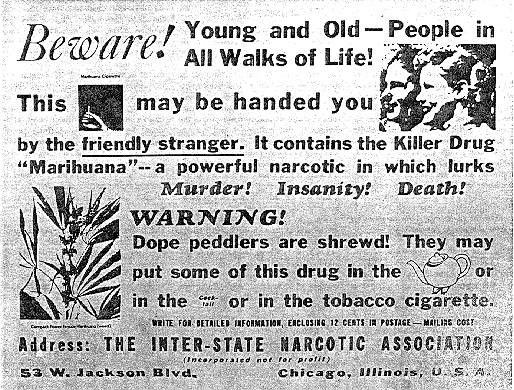
From reading the popular press nowadays one gets the impression that our culture is awash in addictive drugs. In an urban hospital emergency department such as the one where I work, there is abundant evidence that substance abuse is a significant social problem.
Spend some time in such an ED, and you will quickly learn that our society has decided this social problem is a medical problem.
Day after day (and even more, night after night), police and EMS bring us people who have used substantial quantities of mood-altering substances. Ethanol, fermented from myriad carbohydrates, remains the most popular. Various derivatives of the opium poppy are close behind. The extract of the coca leaf is favored in some circles. From time to time we see folks who prefer hallucinogens, psychedelics and dissociative agents.

It would appear that life, for some people, is too boring, depressing, or stressful to be lived without the effects of chemicals that alter the connection between the brain and the external world. This has been true for many centuries.

A decade ago I read an illuminating little book titled Forces of Habit: Drugs and the Making of the Modern World, a fascinating examination of the use of mood-altering substances. Attitudes toward such use, I learned, have been tremendously variable across cultures and time.
In our present society we accept, more or less, indulgence in alcohol, although we impose some restrictions on its use. Drunkenness while operating a motor vehicle will get you in trouble with law enforcement authorities, as will drinking to the point of becoming very badly behaved in public.

If this T-shirt slogan applies to you, it's time to cut back.
Nicotine is allowed but restricted, inasmuch as there are so many places where tobacco smoking is no longer permitted, although that is because the smoke itself (rather than its effect on behavior) is considered offensive.

Caffeine seems the least disapproved of the commonly used addictive substances, at least so far.
Thus the Ethiopian coffee farmers can subsist - or do better than that if they are lucky enough to deal with "fair trade" merchants rather than the price-controlling international cartel.


The opium farmers in Afghanistan and the growers and distributors of the coca leaf in Latin America meet with much less favor among Western authorities. Are their products more powerfully addictive or more dangerous than the others? This is an intriguing question.
From my professional observations, it seems cessation of use is every bit as challenging for those addicted to nicotine as for cocaine or heroin.
Doctors, and this is true for those in my specialty at least as much as any other, find substance abuse and dependence troubling and often tragic. Alcohol, tobacco, cocaine, and heroin ruin health and destroy lives, affecting not only users but their friends and families. One of the most vexing aspects of all this involves the derivatives of the opium poppy (known as "opioids"). Because these substances have a legitimate medicinal purpose, physicians are expected to play a large role in assuring that their use is safe and effective - and limited to the management of painful injuries and illnesses.
With so many people determined to obtain and use opioids for recreational purposes, this is quite a challenge. Medical science brought these substances to the modern Western world, and now we are heavily burdened with attempts to control their use.

A German chemist isolated morphine from the opium poppy in the early 19th century, and the German company Merck made it commercially available in 1827. In 1874 an English chemist modified the morphine molecule by adding two acetyl groups, yielding the substance that became known as heroin. Then a German chemist continued work in this area, resulting in its commercial introduction as a cough suppressant and pain reliever by Bayer in 1888. Twenty-five years later Bayer pulled it from the market because of problems with addiction.
That was 60 years before the Drug Enforcement Administration was established (1973). Now we have the DEA, as well as state medical boards and pharmacy boards, to make rules and decide what doctors can and cannot prescribe for patients, and under what circumstances.

It seems every time I pick up a medical journal or trade publication or peruse the popular press via my favorite news outlets, there is something new doctors are supposed to be doing (or not doing) to address this problem. A year ago the Centers for Disease Control and Prevention asked my specialty organization, the American College of Emergency Physicians, to develop guidelines on the prescribing of opioid analgesics in emergency departments, and earlier this month the ACEP Board of Directors approved such guidelines after lengthy and spirited discussion.

Sometimes I feel like Don Quixote tilting at windmills when we in the emergency department are trying to solve social problems. After more than a quarter century dealing with this one, I can tell you emergency physicians are, by and large, very conservative in their prescribing of opioids and diligent in their efforts to ferret out those who are seeking prescriptions for recreational use or diversion (selling the pills for profit). Nothing we do will solve the problem of pill mills, described in all their astonishing brazenness in an article in Bloomberg's Business Week earlier this month.

At the root of all this, I believe, is an inexplicable, desperate human need for an altered reality, resulting in striking immoderation in the use of substances that seem, just a bit and for just a bit of time, to provide that alteration. In my more philosophically reflective moments I wonder why it is my job to try to separate those who want relief from physical pain from those who seek relief from psychological pain in a way that does not meet with societal approval.
But I like my work, even if I don't care for that part of it, and I will soldier on.
Saturday, June 9, 2012
Keep the Customer Satisfied
 Every so often I find this song playing in the back of my mind as I go about my work in the emergency department. Written by Paul Simon, it was recorded by Simon & Garfunkel and appears on the 1970 album Bridge Over Troubled Water. I was in junior high school when that album was released, so it didn't resonate with me the way it does now. In fact, it would be quite a few years before that phrase took on the meaning it now has for so many of us.
When I was in medical school and residency training there was, as far as I knew, no such thing as this notion of customer satisfaction in the practice of medicine. We were taught to be skilled and thorough in gathering data - medical history and physical examination - and to select the right diagnostic tests as we sought to discern the cause of a patient's symptoms. The goal was to arrive at the correct diagnosis and prescribe treatment that was safe and effective. Ideally, it should also be cost-effective. If, in addition, a doctor happened to have a good "bedside manner," that was icing on the cake.
 Doctors didn't think too much about whether their patients found them likable. We all have different personality styles. A patient who doesn't care for one physician's personality style will choose a different doctor - and promptly be replaced by someone who does like the first doctor. It all evens out. Some patients really don't care whether a physician even has much in the way of bedside manner, as long as he or she is diligent, thorough, and competent. Frankly, that's the way I look at it when I'm a patient: if my doctor has the requisite knowledge and skill to figure out what's wrong with me and what to do about it, I don't care if he has the personality of a cigar store Indian.
Times have changed. Everyone is keenly focused on whether patients are satisfied as customers in the business of health care, and everyone wants to measure their satisfaction with the "patient experience." In many health care enterprises, doctors are financially rewarded for getting high scores on patient satisfaction surveys. And there's nothing like money to influence behavior.
This isn't really a new phenomenon, though. In 1990 I wrote an article for the trade publication Medical Economics entitled "Some Days I Feel Like I Work at K-Mart: How Consumerism Has Affected the Doctor-Patient Relationship." Recently I re-read it and was a little surprised that I had already begun to perceive these same challenges more than two decades ago.
 Take a look at the photo to the left. Doctor and patient, right? The doctor is smiling and engaged in the interaction. It looks promising for patient satisfaction. Actually, this photo comes from the website of a financial services firm, the doctor is the customer, and the business wants to provide the capital she needs to run her practice. But this notion of customer satisfaction is now pervasive in medical practice, and if you want your doctor to be focused on the medicine and not worrying about getting her patients to think she is kind and caring, forget it. That's the old paradigm. (Forgive me for using that word, but send me a scolding e-mail if I ever - and I do mean ever - use the phrase "paradigm shift." That would be unforgivable.)
There can't be anything wrong with doctors being nice and patients liking them, can there? Of course not. So you can stop reading right now. Except for one thing. I think you've heard of it. It's called the Law of Unintended Consequences. Because of this law, good intentions sometimes fail to produce good results.

When you start trying to measure customer satisfaction and give doctors a financial incentive for getting high marks from their patients, you'd better pay attention to what you're measuring and what the doctors think they have to do to improve their scores.
I believe the biggest problem facing us in this realm is that in many other spheres of their lives doctors are customers, and so they have a sense of customer satisfaction from that side of the transaction. What does it take to create a satisfied customer? It's quite simple. Figure out what the customer wants and give it to him.
So the patient has cold symptoms or a sore throat. The doctor thinks the patient must want an antibiotic. Why else would he be consulting a physician? To be told it's a cold and advised to go to the drugstore and buy an off-the-shelf medicine to treat the symptoms? The patient could have just watched TV commercials or asked the druggist at his local pharmacy if he wanted that. No, he must want something by prescription. So he gets an antibiotic for his head cold, sore throat, or chest cold, some illness caused by a virus. Antibiotics don't work against viruses, only bacteria. So there is no potential for benefit - only harm. But the illness gets better on its own, because that's how these things go, and the patient, who did not go on to have eternal bronchitis, figures the antibiotic must have helped. So what will he do every time he gets a viral respiratory infection henceforth and forever? Right. And all those unnecessary antibiotic prescriptions will help promote the development of resistant bacteria.

The doctor who wants to practice good medicine and still get high patient satisfaction scores can just take some extra time and explain to the patient why antibiotics are not indicated, how they are more likely to harm than help, and how they contribute to the problem of resistant bacteria. And then he can hope that his scores will be just as high as those of his colleague in the next office who just writes the antibiotic prescriptions, taking a fraction of the time and mental effort. Good luck with that.
And then there is the challenge of diagnostic testing. Patients like tests. They believe in tests. They have no idea that a smart doctor can often figure out what's wrong with them by eliciting a detailed account of their symptoms and performing a focused physical examination, without ordering any tests at all. Most of the time, test results serve primarily to confirm the diagnosis that was already established in the physician's mind.
For a recent study, investigators queried patients visiting an emergency department with abdominal pain about their confidence in the doctor's diagnosis and their overall satisfaction with the "patient experience." Confidence and satisfaction were low (shockingly low, I thought) when the doctor took a history and examined the patient but ordered no tests, which surely reflects the physician's belief that the diagnosis was simple and straightforward. Both confidence and satisfaction rose steadily as the number of tests increased, with the highest levels reached when the evaluation included a CAT scan.

What this study demonstrated, however, was something emergency physicians already knew intuitively. Abdominal pain is the single most common reason for visits to the emergency department. Many CAT scans are performed. How many of them are really necessary? How many are performed in the pursuit of diagnostic certainty? (And how useful is it to raise diagnostic certainty from 93% to 97%?) How many are ordered because the doctor is afraid of being sued if she misses something? How many are ordered because it will improve customer satisfaction? How would we know? What we do know, however, is that CAT scans are expensive and expose patients to radiation and sometimes to intravenous contrast agents that occasionally cause harmful reactions.
I don't know about you, but I want my doctor to order a CAT scan only if it is really necessary, and certainly not because he thinks I will have more confidence in his diagnosis and a higher level of satisfaction with the "patient experience" if he orders more tests.
Doctors now live and work in a world in which health care managers worship at the altar of customer satisfaction. There are serious problems with how patients' satisfaction is measured and how the results are interpreted. We are just beginning to understand these problems.
 And yet, at a time when we should still be very concerned about our ability to define and measure patient satisfaction, to figure out what to do with the results when we do measure it, and to prevent unintended consequences, the federal government is already implementing a system that will financially punish hospitals that don't get high scores.
None of us should be surprised that public policy is being formulated and implemented without good science to support it. But we should be worried.
Friday, June 1, 2012
Don't Drink That!
Michael Bloomberg, the mayor of New York City, is proposing a ban on the sale of "sugary soft drinks" in containers larger than 16 ounces in restaurants, movie theaters, stadiums, and arenas. This is just the latest move in his campaign to get people to make more healthful dietary choices.
 Given that people can simply go back for seconds, it would seem that the effect of this restriction might be educational, in that it would force New Yorkers to think about the fact that they are consuming large amounts of sugar in their beverages. The city's health department already runs ads in the subways telling consumers this is not good for them.
It's possible there are many people who don't already know this, but I'm skeptical. One need not conduct a laborious search to find information about this sort of thing. Drinking Coca-Cola®? An eight-ounce serving has about 100 calories from sugar, the same amount you'd get by adding four well-rounded teaspoons of sugar to a cup of coffee. The effect of this is not a mystery, either. Just one such 8-ounce beverage per day will add ten pounds of fat to your body in a year. Put another way, the substitution of a non-caloric beverage, such as water or a diet soft drink, would translate into a ten-pound weight loss in a year. If you're the sort of person who goes through a two-liter bottle of regular soda pop each day, getting rid of those calories would help you drop 80 pounds in a year, assuming you didn't just replace the calories by eating chocolate chip cookies. We all have to make choices, of course, so if I'm keeping my calories constant, I'll definitely take the diet cola and eat the chocolate chip cookies, thank you very much.
 The problem is not a lack of information. Everything is online nowadays, and a few keystrokes on a computer, tablet, or smartphone will summon the caloric content of just about anything. If you don't know, it's because you don't want to know. And if you don't want to know, Mayor Bloomberg is not going to change that by keeping you from buying more than 16 ounces in a single container at a time. He could send you off to a reeducation camp in the countryside, like they did in China during the Cultural Revolution, but I think the libertarians and others opposed to the "nanny state" approach to public health would find this more objectionable than the soft drink limit.
Mayor Bloomberg is correct when he opines that obesity is a major public health problem in the United States. When people register as patients in the emergency department where I work, a nurse enters height and weight in the computer system, and body mass index (BMI) is automatically calculated. This is one of many bits of information I can see at a glance for every patient. So many patients are overweight that I am pleasantly surprised when I see a BMI less than 25.

Public education is a good thing. I readily concede that it may help if people are frequently reminded of things they already know. And educating our children about healthful dietary choices is certainly a sensible approach. So Michelle Obama's focus on childhood obesity may make a difference in the lives of some Americans. Perhaps as a result of her interest in this problem, some of us will grow up choosing our food and beverages more wisely and getting more, and more regular, exercise. The Bush Administration's efforts to improve public education, labeled "No Child Left Behind," have no shortage of critics, but I'm hoping Mrs. Obama's programmatic vision, which I have whimsically dubbed "No Child with a Fat Behind" will be better received and more effective.
Government's efforts to protect us from ourselves have produced mixed results, mostly because we stubbornly resist. We have seatbelt laws, and yet people drive without wearing their seatbelts, with predictable and tragic results when they are involved in crashes. We have motorcycle helmet laws, and riders generally comply where such laws are in effect - mainly because police can see so easily when riders are violating the law. But everywhere that there are helmet laws, freedom-loving bikers incessantly lobby for their repeal. It is difficult for me to believe that the families of unhelmeted motorcyclists who die or suffer severe, permanent disability from head injuries are thankful for the legislative efforts of the libertarian bikers. Yet those efforts continue unabated (pun intended).

This time of year I begin seeing many young people who somehow find it appealing to ride all-terrain vehicles in the dark, in the woods, drunk, with no helmets or protective clothing. The results of such behavior are predictable, even if you are not too bright and have never set foot into the trauma bay of a hospital emergency department.
So what, exactly, does Mayor Bloomberg think will be the effect of figuratively shaking the nanny state's finger at such stubborn folk when they want to buy a soft drink in a Big Gulp size? Bloomberg likes limits. He thinks if laws limit citizens to purchasing one handgun per month, we will have less violent crime committed with guns.

Maybe that's true. And maybe if you can't buy a 20-ounce soft drink at Yankee Stadium, that will help you get thinner.
But Americans don't like limits. And New Yorkers don't like Bloomberg's policies, at least judging by a 44% approval rating in one recent poll. We do like information. (Consider Wikipedia's estimated 3 billion page views per month in the U.S., if you have any doubts about that.) It's just that we like to decide for ourselves what to do with that information.

It's possible there are many people who don't already know this, but I'm skeptical. One need not conduct a laborious search to find information about this sort of thing. Drinking Coca-Cola®? An eight-ounce serving has about 100 calories from sugar, the same amount you'd get by adding four well-rounded teaspoons of sugar to a cup of coffee. The effect of this is not a mystery, either. Just one such 8-ounce beverage per day will add ten pounds of fat to your body in a year. Put another way, the substitution of a non-caloric beverage, such as water or a diet soft drink, would translate into a ten-pound weight loss in a year. If you're the sort of person who goes through a two-liter bottle of regular soda pop each day, getting rid of those calories would help you drop 80 pounds in a year, assuming you didn't just replace the calories by eating chocolate chip cookies. We all have to make choices, of course, so if I'm keeping my calories constant, I'll definitely take the diet cola and eat the chocolate chip cookies, thank you very much.

Mayor Bloomberg is correct when he opines that obesity is a major public health problem in the United States. When people register as patients in the emergency department where I work, a nurse enters height and weight in the computer system, and body mass index (BMI) is automatically calculated. This is one of many bits of information I can see at a glance for every patient. So many patients are overweight that I am pleasantly surprised when I see a BMI less than 25.

Public education is a good thing. I readily concede that it may help if people are frequently reminded of things they already know. And educating our children about healthful dietary choices is certainly a sensible approach. So Michelle Obama's focus on childhood obesity may make a difference in the lives of some Americans. Perhaps as a result of her interest in this problem, some of us will grow up choosing our food and beverages more wisely and getting more, and more regular, exercise. The Bush Administration's efforts to improve public education, labeled "No Child Left Behind," have no shortage of critics, but I'm hoping Mrs. Obama's programmatic vision, which I have whimsically dubbed "No Child with a Fat Behind" will be better received and more effective.
Government's efforts to protect us from ourselves have produced mixed results, mostly because we stubbornly resist. We have seatbelt laws, and yet people drive without wearing their seatbelts, with predictable and tragic results when they are involved in crashes. We have motorcycle helmet laws, and riders generally comply where such laws are in effect - mainly because police can see so easily when riders are violating the law. But everywhere that there are helmet laws, freedom-loving bikers incessantly lobby for their repeal. It is difficult for me to believe that the families of unhelmeted motorcyclists who die or suffer severe, permanent disability from head injuries are thankful for the legislative efforts of the libertarian bikers. Yet those efforts continue unabated (pun intended).

This time of year I begin seeing many young people who somehow find it appealing to ride all-terrain vehicles in the dark, in the woods, drunk, with no helmets or protective clothing. The results of such behavior are predictable, even if you are not too bright and have never set foot into the trauma bay of a hospital emergency department.
So what, exactly, does Mayor Bloomberg think will be the effect of figuratively shaking the nanny state's finger at such stubborn folk when they want to buy a soft drink in a Big Gulp size? Bloomberg likes limits. He thinks if laws limit citizens to purchasing one handgun per month, we will have less violent crime committed with guns.

Maybe that's true. And maybe if you can't buy a 20-ounce soft drink at Yankee Stadium, that will help you get thinner.
But Americans don't like limits. And New Yorkers don't like Bloomberg's policies, at least judging by a 44% approval rating in one recent poll. We do like information. (Consider Wikipedia's estimated 3 billion page views per month in the U.S., if you have any doubts about that.) It's just that we like to decide for ourselves what to do with that information.
Subscribe to:
Posts (Atom)