The last essay, about the use of Web searching by persons attempting to diagnose their own maladies, focused on one of the many ways modern technology has changed our lives. Of much greater importance, in the daily routines of some, is the option of telecommuting.
The idea of being able to work from home has tremendous appeal. Although in my specialty of emergency medicine it really isn't an option, because there are so many reasons we are "hospital based," in decades past some doctors had their offices in their homes. My first eye doctor was one of them. But there were still direct personal connections being made between the doctor and his patients and among the office staff.
Nowadays, though, there are many kinds of jobs in which the connections can be made electronically. We do so much of our work on computers, and when we communicate about that work with our associates, much of that can be done electronically, too. Imagine an engineer whose work focuses on design or sales. Most of the work is done on a computer, and most of the communication with customers and colleagues is by phone or e-mail. Often that can be done as readily from home, where the computer and the telephone work quite nicely.
Some people who do this kind of work in an office may adjust their hours, perhaps arriving earlier or leaving later than others. Road traffic may be part of the motivation, but often it's because those different hours at the beginning or the end of the day are times when one can be most productive because of the lack of interruptions. So imagine how interruption-free your day could be if you have no children or they are in school, and your spouse (if you have one) is either not home or respects your privacy in a home office.
The key to a job suitable for telecommuting is usually a computer. And so it is not at all surprising that a company like Yahoo would have many employees who work from home quite a bit. What is surprising, however, is that Yahoo's CEO, Marissa Mayer, has declared an end to this. Yahoo employees who telecommute are being pulled back into the office - or dismissed. If you didn't know who she was, you could be forgiven for thinking she must have come to Yahoo from some company in a traditional manufacturing business.
Nope. It was Google. She spent 13 years with Google before becoming, at the age of 37, the youngest CEO of a Fortune 500 company when she moved over to Yahoo last summer.
The news reports say this is all about productivity, and the experts discussing this, during the sort of in-depth programming one finds on NPR, cite studies that show most people are more productive when they work in an office at the company, even if it's work that could be done at home. And it isn't just a matter of self-discipline or time management, although those are contributing factors. No, they tell us, it's the opportunity to interact with colleagues face to face, whether it's in formal meetings or just wandering over to each other's cubicles from time to time.
My work involves a great deal of personal interaction. Doctors interact very directly with patients, nurses, and each other. It would be difficult for me to teach students and residents, tomorrow's practitioners of my specialty, remotely, even with the advanced video technology now available.
But what about in these other professions? How important are those direct encounters? The experts say phone calls and e-mails are less effective forms of communication because of the loss of intonation, inflection, and non-verbal cues, deficiencies incompletely addressed with videoconferencing. I am inclined to agree with them about that, because a year ago I participated in a board meeting by video link after winter storms made it impossible for me to get from Pennsylvania to Texas. It just wasn't the same. I was not a full participant.
I cannot help wondering, though, whether Mayer's directive is the right answer. Are those face-to-face encounters so important that we must have them every working day? Couldn't Tuesday and Thursday, for example, be enough? Perhaps Yahoo will make this big move and then ease into some level of compromise.
The concern about direct personal interactions seems to me to be chiefly qualitative. But there are likely some solid quantitative data, too. Some kinds of productivity do lend themselves to metrics. If you are assembling widgets (my favorite word for some item that is ill-defined and is to remain unspecified), we can easily measure how many of them come off the line per unit time. Productivity metrics in the kinds of work people do on computers, from home, are more elusive.
Further, it is intuitively obvious that there is tremendous individual variation. Undoubtedly some people have a work style that would cause them to get nothing done if they tried to do it at home, because there are just too many distractions. Even if it would never cross your mind to turn on a television, if you get the impulse to surf the Web, there's no one around to notice. The refrigerator is right there. You can have a beverage or a snack whenever you like, which is not the case in very many offices. A dog appears in front of you holding a leash in his mouth. A cat rubs up against you, informing you of a desire to have your undivided attention for a minute or two. You could brew another pot of coffee, but you cannot help wondering what your work flow might be like if you had a pint of ale instead.
When I'm writing, I need absolute concentration. Interruptions are most unwelcome. I think it would not go well if I tried to do it in a cubicle with other people around, people who might wander over to talk to me about something, at any moment, unannounced. In my day job, which this isn't, every hour of every day is a constant stream of interruptions. That's just the nature of the work. Learning how to cope with that and not allow it to cause errors is a lifelong endeavor, and few achieve complete mastery. There is an occasional moment when I want to ask a coworker, "Do you realize that you just interrupted someone who interrupted me while I was talking to someone who interrupted a train of thought that is now hopelessly derailed?" But I don't. I just smile, because that's never going to change. It can't. I simply have to manage it.
The point is that, for some kinds of work, my productivity would be so much greater if I stayed home, because the work environment there is conducive. And that's without taking into account all the extra time spent getting to and from work. Oh, and don't forget the time one must spend working to earn the money to pay transportation expenses. I realize the employer may not care about that, but it's all part of the calculus.
Last spring an engineer missed the last step or two on her way down to the kitchen late at night. The consequent injury made it impossible for her to go into the office for a couple of months. I happen to be married to her, so I had ample opportunity to make observations of her adaptation to working from home. I'm pretty sure her productivity was unchanged or better during that time.
It is my suspicion that Mayer is on the wrong track here. But then, so is Yahoo, which has had four different people in the CEO job in the last 18 months and has seen its sales slumping badly in the last few years. If Mayer can turn the company around, she'll get much credit and impress many people. Probably little if any of such a turnaround will be related to improved productivity. But it is safe to say that if the company doesn't recover from its doldrums, the end of the era of Yahoo employees being able to work from home will be perceived as just another dumb idea.
The CEO had her first child last fall. She told a reporter for Fortune magazine, paraphrasing Vince Lombardi, that her priorities were "God, family, and Yahoo" - in that order. (Lombardi's trinity included the Green Bay Packers.) Given that sensible ordering of priorities, I suspect she will have reason to work from home quite a few days during her son's infancy and toddlerhood.
Wednesday, February 27, 2013


Friday, February 22, 2013
Paging Dr. Google


The writer's central thesis was that people who do this are likely to encounter a bewildering array of possible causes and great difficulty in sorting out which ones are worthy of serious consideration. Thus a person who is anxious about something might well embark upon such a search only to have the anxiety greatly intensified rather than assuaged.

As I read this, I was seized by the urge to find this writer, grab him by the lapels of his blazer, shake him vigorously, and say, "No! What is wrong with you?"

The author of the article engaged in hand-wringing about the fact that there are some sources of information on the Web that are frightfully unreliable. True, of course. But I think most folks who search the Web have acquired significant ability to separate wheat from chaff. And I have found that much of the most useful information comes not from mainstream sites (like WebMD) but from discussion boards and streams of comments on blog sites.


Use the Web. Ask friends, family, co-workers. Be self-reliant. Do not seek professional health care for every little thing that doesn't feel quite right. If you - and all of his other patients - make an appointment to see your doctor for every little thing, thus taking up all of his time reassuring the worried well, guess what will happen when his patient who might have pneumonia calls the office? That's right. She will be told there are no appointments left, and she'll have to come see me.
If you are suddenly unable to speak or move your right arm and leg, or if you cannot breathe because there is a ton of bricks sitting on your chest, pick up the phone and call 911. We will take good care of you in the ED.
 But if you are the worried well, please feel free to have a seat in front of your computer. And if, after you engage in as much searching as it takes for you to get some sense of what the problem might be, you are still baffled, take out your health insurance card and see if there is a phone number for an "ask-a-nurse" line.
Please don't call your doctor's office and make an appointment for every little thing. He has very few open appointments. And the doctor shortage is intensifying, so this is only going to get worse.
Friday, February 15, 2013
Is Congressional Self-Respect Delusional?


Yesterday House Minority Leader Nancy Pelosi (D-CA) was asked whether congressional pay should be frozen. "I don't think we should do it," she said. "I think we should respect the work we do."
Self-respect, and respect for the value of one's work, are good things. But most of us don't have the power to set our own compensation. Sure, we can negotiate for raises, and we can always leave one job for another to get a better deal. But our ability to do those things is heavily dependent on the job market - and on our record of job performance.

Can you imagine going to your boss and asking for a raise if your job performance was worthy of a 13.9% approval rating?

If all that happened was that you were laughed out of the office, as opposed to being tossed out onto the street or marched down a plank at the point of a sword, you would count yourself fortunate.
It has long been a truism that people have a low opinion of Congress but a much more favorable view, typically, of the individual Member of Congress who represents their district. I'm not sure about the numbers, and over the course of my adult life I've had a few U.S. Representatives for my district I would have liked to fire personally. But it so happens I like the congressman I have now. If I were to speak to him directly, as I do from time to time - most recently during a chance encounter when we had both just arrived at Reagan National Airport - and he asked me if I thought he deserved a raise, I think I'd probably say he was doing a good job but I'd have to check the numbers and see if there was any money available.
 |
| Here's an even scarier view of the debt |
Ay, there's the rub. Is there money available? How can anyone ask that with a straight face, with the national debt now exceeding $16.5 trillion?
We all have families to support, bills to pay, obligations to feed, clothe, and shelter our dependents. Members of Congress - not including Rep. Pelosi, whose husband is a wealthy real estate developer - struggle with the same kinds of obligations. The current salary is $174,000, and there are expense allowances and other perks. Oh, and don't forget that COLA.


We know the state of the economy, and we know family incomes are falling, not rising.
And we are the employer of our elected representatives. Do you have the money to pay them more? I know my answer.
Monday, January 28, 2013
Give Up on the Constitution?
Undoubtedly editorialists sometimes write things to be provocative. There are times when I must keep telling myself that, times when I think if one of them really meant what he wrote, I'd wonder how anyone could be that stupid.
On December 30, 2012 the New York Times ran a piece by Louis Michael Seidman, a professor of constitutional law at Georgetown University, titled "Let's Give Up on the Constitution." I pride myself on a vocabulary more extensive than possessed by most people with the same level of education as I, but most of the words that came to mind as I read Professor Seidman's column were not acceptable in polite company.
Seidman's thesis is that our nation's principal governing document was created by a bunch of propertied white men who thought slavery was OK and could not have any idea what life would be like two centuries later. What relevance could - or should - such a document have for us? It is, he insists, full of "archaic, idiosyncratic, and downright evil provisions."
It is true that the Framers could not come up with a way of ridding the new nation of the "peculiar institution" of African slavery, and so there are provisions dealing with the slave trade, which Congress was denied the power to prohibit until 1808, and the return of fugitive slaves to their owners, and the counting of a slave as three fifths of a person for purposes of determining a state's number of representatives in the House. Notably, we fought a war that had the effect of eliminating the evil of African slavery, and the Constitution was amended to specify just how the freed slaves were to be treated. Offhand, I cannot identify any other provisions of the original Constitution that meet my definition of evil. (Later revision, however, is a different matter, as each spring I find myself thinking the Sixteenth Amendment's provision for direct taxation of individual income is evil.)
Aside from "evil," it is entirely plausible that some provisions of the Constitution might be viewed as "archaic" or "idiosyncratic." Article I is about the legislative branch of the national government, and it describes a bicameral Congress along with the qualifications for office, the manner of election, and the scope of authority and responsibility, as well as the limits on power.
Nowadays many people think one needs a college education to be an effective Member of Congress. In the 18th century the country didn't have the system of education we have now. Should a college education be a necessity? Isn't it "archaic" to have the only requirement be one of age (25 years)? The terms of Representatives are two years long, with no limit. And six years for Senators, again with no limit. Why not four years for both, and why not a limit of 12 years total? These days most people seem to favor term limits. Aren't the original specifics "idiosyncratic?"
Seidman isn't interested in changing any of that. He does, however, make particular mention of Section 7's requirement that bills for raising revenue originate in the House (rather than the Senate). The Framers thought the chamber with more democratic representation should be the prime mover behind taxation. That isn't "archaic" or "idiosyncratic." It makes sense. But Seidman doesn't like it.
He also notes that the fuss over whether Barack Obama was born in the United States existed only because the Constitution says the president must be a "natural born Citizen." Why should we care about that? Well, apparently we do care. We've had more than two centuries to think about it, and we've had the occasional foreign-born citizen (such as Henry Kissinger or Arnold Schwarzenegger) sufficiently popular to make people reconsider it. But we have left this requirement unchanged. And it's not as though we haven't taken notice of how important it is what the Constitution says about the office of president. It took a century and a half to discard the precedent set by George Washington and elect a president to more than two terms. Then, having done that, we amended the Constitution to make sure we didn't do it again.
Congress cannot pass a law declaring me a criminal. Neither can it pass one making something I did last year illegal, turning me into a lawbreaker retroactively. Such laws (a bill of attainder in the first case, an ex post facto law in the second) are prohibited by Article I, Section 9.
When I go to Capitol Hill to visit my Congressman, the Capitol police cannot arrest me for bothering him. In September, 2005, thousands of people held a rally on the lawn of the Capitol to draw attention to the need for greater focus on the problems of our nation's system of emergency medical care. The Capitol police required that we let them know what we were up to, and granted us a permit, and we had to be peaceable. But they couldn't tell us we weren't allowed to do that. Nearly a hundred times now I have sat down with my computer and written essays for this blog. The government cannot prohibit my doing so, even though I am often critical of it. We are guaranteed all of these liberties by a single sentence in the Constitution (the First Amendment).
Seidman doesn't say we shouldn't have these liberties, just that we don't need the Constitution to guarantee them:
I cannot begin to imagine how a professor who has taught constitutional law for nearly four decades can write such a thing. Respect? Can we really think the government will respect our liberties if they are not guaranteed against infringement by a document that exists in part to restrain government?
Has Seidman ever taken a look at the national debt? As of this writing, it is rapidly approaching $16.5 trillion. We have a government that does not grasp arithmetic reality, let alone political philosophy. How many of the 535 members of the House and Senate do you think have read John Locke, when they legislate as if they don't know what the debt clock says this week? Seidman questions who should have the power of the purse and says it might be Congress, but that should be determined on contemporary policy grounds and not by the Constitution. OK, I'll grant that Congress spends like so many drunken sailors (with apologies to those drunken sailors who rightly note that they quit spending when they run out of money). But is someone else going to exercise more restraint?
Seidman says,
Seidman asserts that presidents from Adams and Jefferson to Lincoln and FDR have flouted the Constitution. The implication seems to be that if such noncompliance suited them, we could do just fine without the traditional constraints. We can just hope that freedom of religion, the right to due process and jury trial, protection from unwarranted search and seizure and from cruel and unusual punishment will remain ours in perpetuity even with no guarantees of "our political stability" by the "poetic piece of parchment" he so casually disparages.
That "poetic piece of parchment" is not immutable. We can change it. Even after we added the Bill of Rights, we amended the Constitution seventeen times. It's easy to find out how: just read Article V.
Seidman's forthcoming book is titled On Constitutional Disobedience. I can hardly wait.
On December 30, 2012 the New York Times ran a piece by Louis Michael Seidman, a professor of constitutional law at Georgetown University, titled "Let's Give Up on the Constitution." I pride myself on a vocabulary more extensive than possessed by most people with the same level of education as I, but most of the words that came to mind as I read Professor Seidman's column were not acceptable in polite company.
Seidman's thesis is that our nation's principal governing document was created by a bunch of propertied white men who thought slavery was OK and could not have any idea what life would be like two centuries later. What relevance could - or should - such a document have for us? It is, he insists, full of "archaic, idiosyncratic, and downright evil provisions."
It is true that the Framers could not come up with a way of ridding the new nation of the "peculiar institution" of African slavery, and so there are provisions dealing with the slave trade, which Congress was denied the power to prohibit until 1808, and the return of fugitive slaves to their owners, and the counting of a slave as three fifths of a person for purposes of determining a state's number of representatives in the House. Notably, we fought a war that had the effect of eliminating the evil of African slavery, and the Constitution was amended to specify just how the freed slaves were to be treated. Offhand, I cannot identify any other provisions of the original Constitution that meet my definition of evil. (Later revision, however, is a different matter, as each spring I find myself thinking the Sixteenth Amendment's provision for direct taxation of individual income is evil.)
Aside from "evil," it is entirely plausible that some provisions of the Constitution might be viewed as "archaic" or "idiosyncratic." Article I is about the legislative branch of the national government, and it describes a bicameral Congress along with the qualifications for office, the manner of election, and the scope of authority and responsibility, as well as the limits on power.
Nowadays many people think one needs a college education to be an effective Member of Congress. In the 18th century the country didn't have the system of education we have now. Should a college education be a necessity? Isn't it "archaic" to have the only requirement be one of age (25 years)? The terms of Representatives are two years long, with no limit. And six years for Senators, again with no limit. Why not four years for both, and why not a limit of 12 years total? These days most people seem to favor term limits. Aren't the original specifics "idiosyncratic?"
Seidman isn't interested in changing any of that. He does, however, make particular mention of Section 7's requirement that bills for raising revenue originate in the House (rather than the Senate). The Framers thought the chamber with more democratic representation should be the prime mover behind taxation. That isn't "archaic" or "idiosyncratic." It makes sense. But Seidman doesn't like it.
He also notes that the fuss over whether Barack Obama was born in the United States existed only because the Constitution says the president must be a "natural born Citizen." Why should we care about that? Well, apparently we do care. We've had more than two centuries to think about it, and we've had the occasional foreign-born citizen (such as Henry Kissinger or Arnold Schwarzenegger) sufficiently popular to make people reconsider it. But we have left this requirement unchanged. And it's not as though we haven't taken notice of how important it is what the Constitution says about the office of president. It took a century and a half to discard the precedent set by George Washington and elect a president to more than two terms. Then, having done that, we amended the Constitution to make sure we didn't do it again.
Congress cannot pass a law declaring me a criminal. Neither can it pass one making something I did last year illegal, turning me into a lawbreaker retroactively. Such laws (a bill of attainder in the first case, an ex post facto law in the second) are prohibited by Article I, Section 9.
When I go to Capitol Hill to visit my Congressman, the Capitol police cannot arrest me for bothering him. In September, 2005, thousands of people held a rally on the lawn of the Capitol to draw attention to the need for greater focus on the problems of our nation's system of emergency medical care. The Capitol police required that we let them know what we were up to, and granted us a permit, and we had to be peaceable. But they couldn't tell us we weren't allowed to do that. Nearly a hundred times now I have sat down with my computer and written essays for this blog. The government cannot prohibit my doing so, even though I am often critical of it. We are guaranteed all of these liberties by a single sentence in the Constitution (the First Amendment).
Seidman doesn't say we shouldn't have these liberties, just that we don't need the Constitution to guarantee them:
This is not to say that we should disobey all constitutional commands. Freedom of speech and religion, equal protection of the laws and protections against governmental deprivation of life, liberty or property are important, whether or not they are in the Constitution. We should continue to follow those requirements out of respect, not obligation.
I cannot begin to imagine how a professor who has taught constitutional law for nearly four decades can write such a thing. Respect? Can we really think the government will respect our liberties if they are not guaranteed against infringement by a document that exists in part to restrain government?
Has Seidman ever taken a look at the national debt? As of this writing, it is rapidly approaching $16.5 trillion. We have a government that does not grasp arithmetic reality, let alone political philosophy. How many of the 535 members of the House and Senate do you think have read John Locke, when they legislate as if they don't know what the debt clock says this week? Seidman questions who should have the power of the purse and says it might be Congress, but that should be determined on contemporary policy grounds and not by the Constitution. OK, I'll grant that Congress spends like so many drunken sailors (with apologies to those drunken sailors who rightly note that they quit spending when they run out of money). But is someone else going to exercise more restraint?
Seidman says,
...the failure of the Congress and the White House to agree has already destabilized the country. Countries like Britain and New Zealand have systems of parliamentary supremacy and no written constitution, but are held together by longstanding traditions, accepted modes of procedure and engaged citizens. We, too, could draw on these resources.Now I am definitely losing the thread of his argument. The people inside the beltway cannot play nice even when they have rules to follow, but if we just drop the rules altogether, relying on "accepted modes of procedure and engaged citizens," all will be well. The last time I looked, Georgetown was a Jesuit institution. Are its law professors really allowed to indulge in hallucinogens?
Seidman asserts that presidents from Adams and Jefferson to Lincoln and FDR have flouted the Constitution. The implication seems to be that if such noncompliance suited them, we could do just fine without the traditional constraints. We can just hope that freedom of religion, the right to due process and jury trial, protection from unwarranted search and seizure and from cruel and unusual punishment will remain ours in perpetuity even with no guarantees of "our political stability" by the "poetic piece of parchment" he so casually disparages.
That "poetic piece of parchment" is not immutable. We can change it. Even after we added the Bill of Rights, we amended the Constitution seventeen times. It's easy to find out how: just read Article V.
Seidman's forthcoming book is titled On Constitutional Disobedience. I can hardly wait.
Sunday, January 27, 2013
Is Gun Registration Constitutional?
Do a Google search on whether registering guns is a good idea, and you will find enough to read to keep you busy for a very long time. Before long, however, you will realize that it boils down to motives.
One's first take might be that registration provides a record of where the guns are, and you have to know that in case they are misused. But those who are familiar with the manufacture and sale of firearms understand that there is no such need for registration.
When a gun is manufactured, it is engraved with a serial number. The law requires that a record be kept of its movement from manufacturer to wholesaler, from wholesaler to retailer, and from retailer to consumer. If a gun is used in the commission of a crime, and it is recovered and has not had its serial number filed off (a felony), it is a simple matter to trace it from manufacturer to last owner of record. For this reason, any law-abiding gun owner should immediately report to law enforcement when a gun is lost or stolen. If the gun is later used in a crime, you want to make sure there is a record of the date from which you no longer possessed it.
When I buy a gun, a record of the sale is filed with a law enforcement agency (where I live, it's the state police), and that is how the gun can be traced to me. And so it is the gun, not the owner, that is registered. The police can look up a gun and find out who is the last owner of record. In Pennsylvania, however, state law prohibits the state police from organizing the database by owner, and so the police cannot look up a person and find out what guns he owns.
The word "registration," in the vocabulary of gun control legislation, refers to registration of owners. This creates a database that can be used to find out who owns what. This yields two problems. The first is a matter of the purposes for which it can be put to use by law enforcement. The second is a matter of who else can gain access to the database, whether through the Freedom of Information Act (FOIA), or just by computer hacking.
Recently a newspaper in New York state attracted much attention by using the FOIA to publish the names of registered gun owners in certain suburbs of NYC. Owners were greatly displeased, because they didn't want burglars to select their homes for possible theft of firearms. Those not on the list, however, might have even greater reason to be displeased, because publication made one thing clear about their homes: no guns here, so no reason to fear you'll be shot if you break in and someone happens to be home.
So, if law enforcement already has a registry of guns, and that can be used to track them if they are recovered after being misused, why do they want a registry of owners?
Gun owners all say the same thing in response to this question: registration leads to confiscation.
This has happened in Australia. Owners of certain firearms (notably semiautomatic rifles) were registered. When it was subsequently decided that these weapons were to be banned, police knew which (law-abiding) citizens owned them, and it was then a simple matter to round them up.
How about here in the United States? Owners must register in New York state. Some years ago, New York City decided to ban certain firearms (notably semiautomatic rifles), and this was made possible because a registry of owners existed. Owners were told they could turn in their guns, sell them to someone outside the city, or show proof that the guns had in some other manner been relocated out of the city.
Senator Dianne Feinstein (D-CA) is proposing a new ban on semiautomatic rifles. Her legislation also stipulates that current owners of the banned firearms may retain them but must register them. So the question is why owners should comply, if the only plausible reason for registration is future confiscation.
Oh, no, you might be thinking, that would never happen in the US, because we have the Second Amendment, and gun owners would never stand for that, and everyone knows that. But if there is no other rationale for registration, why propose it?
Consider this scenario. I happen to own several semiautomatic rifles. A crime is committed in my region. A semiautomatic rifle is recovered with its serial number defaced. Or there are simply eyewitness reports that such a firearm was used in the crime. Law enforcement officials have a registry of everyone who owns such guns. They should simply pay a visit to each and every one of them and ask to inspect their premises and make sure all registered weapons are accounted for.
Are you OK with that? Perhaps you are. Gun owners typically are not.
At this point it is unclear whether the requirement that "grandfathered" semiautomatic rifles be registered under the National Firearms Act of 1934 (the law that regulates machine guns) will survive in the version that is ultimately considered in the Senate. There is conflicting information about this on Senator Feinstein's Website. But this brings me to the question posed by the title of this essay.
The United States Constitution prohibits Congress and the states from enacting "ex post facto" laws. These are laws prohibiting something that was legal before the law was enacted and applying it retroactively. It is not always a simple, straightforward matter to determine if a law violates this provision of the Constitution. Some retroactive laws seem blatantly unfair but are allowed. For example, the county in which I live can decide that my house is worth more than the value on which it was previously taxed and expect me to pay the difference going back several years. I think that's ridiculous, but it's permitted.
So let's say I own a gun that is unregistered because it there is no requirement that it be registered. There was no such requirement when I bought it. Now a new law is enacted requiring registration. Possessing an unregistered gun was legal yesterday, illegal today. What I was doing was legal yesterday and now - without any change in my behavior, without any new action on my part - is illegal.
One could argue that the government is not retroactively making my action (actually inaction) illegal and punishing me for past behavior that was not illegal at the time. Rather, the government is simply telling me what I must do from now on.
But the argument will surely be made that a requirement for registration is practicable only if it occurs at the time of acquisition, and that an expectation that a person will study newly enacted legislation to assure compliance when he is doing nothing new or different - in fact, doing nothing at all - is unreasonable, and that such an expectation is tantamount to an ex post facto law.
Much will depend on how the law is written. If you possess an unregistered gun, will the government have to prove that you knew registration was required? If so, the law might well pass constitutional muster. If not, well, don't count on it.
I'm not an expert in constitutional law. And I don't even play one on TV. But if I'm choosing sides, I'm siding against this one.
Of course I'm also siding against it because I've seen no convincing rationale for registration other than subsequent confiscation, and I think the government should just not go there. Many people who advocate registration and bans simply do not believe in private ownership of firearms. I'm pretty sure Feinstein is in that camp. And that's OK. Just be honest about it, and we can have a spirited debate on that point.
Thursday, January 17, 2013
Mandatory Flu Vaccine for Health Care Workers
“Are there any side effects I should know about?” asked the young lady.
“No, there aren’t,” answered the doctor.
It wasn’t the vaccine for influenza they were discussing. It was the vaccine being marketed by Merck under the trade name Gardasil. It is supposed to protect against the human papilloma virus, thought to be a common cause of cancer of the cervix.
I was hearing about this conversation after the fact. The patient was in her mid-teens, bright, well-educated, and well-read. The doctor was a family practitioner. Trying to be charitable, I told the young lady that the doctor was being paternalistic, although that is a behavior that should be passé among physicians. She was saying there were no side effects that should dissuade the patient from accepting the vaccine, failing to understand that was the patient’s call to make, not the doctor’s. And she might have answered differently if the patient had been ten years older.
From my perspective, having spent many years studying biomedical and professional ethics, I considered the doctor’s behavior to violate the ordering principle of medical ethics in Western societies: patient autonomy. The patient thought the doctor was just a liar. Perhaps now that the patient is a college student, pre-med, who has learned a good bit about medical ethics already, she would be more charitable. But her reaction - which was to decide against accepting the vaccine and simultaneously to decide she would not be seeing that doctor again - illustrates the importance of honesty in the doctor-patient relationship.
That young patient was my daughter, and she knew that her very conservative lifestyle meant her risk of acquiring HPV was zero, that the risk of an adverse reaction to the vaccine was small but non-zero, and that therefore the risk-benefit analysis did not come down on the side of benefit.
For many years I have worked at hospitals that strongly encouraged employees, especially nurses, to get a flu shot every year. The “pitch” was that it would protect the recipient from getting sick. Every time I read or heard the pitch, I bristled. They should be honest, I said. It is not at all clear that, for a young healthy person not in any high-risk group, the risk-benefit analysis favors benefit. What is such a person’s chance of becoming seriously ill with seasonal flu? Very small. What about the risk of a serious adverse reaction to the vaccine? (Guillain-Barre syndrome, which causes paralysis, starting in the legs and moving up, sometimes temporary, sometimes not, is the most common serious reaction.) Also very small, but non-zero. The risk-benefit analysis should be carefully considered by the person contemplating accepting the vaccine.
I thought the hospital management, employee health department, or infection control practitioner - whoever was making the pitch - should say the reason for being vaccinated was to protect our patients, to avoid acting as vectors of transmission of influenza from sick patients to those who were not sick with the flu but were susceptible.
As it turns out, the effectiveness of vaccinating health care workers as a way of protecting their patients is a matter of some controversy. It is intuitively appealing. It makes sense. From what we know about contagion and public health and healthcare associated infections, it just has to be true. But it’s not so easy to study, and the available evidence is not compelling.
And that brings us to the subject of this essay: mandatory vaccination.
The Centers for Disease Control and Prevention (CDC-P, or just CDC for short) currently recommends that everyone (past the age of six months) get the flu vaccine. I have to assume the rationale is that it will reduce the total societal burden of influenza illness during flu season. But people don’t find that persuasive. They want to hear that it will keep them from getting sick. So that is the message. If the messengers are being responsible, they will include the caveat that the vaccine isn’t 100%, and it’s still important to pay attention to hygienic measures that reduce contagion.
But they aren’t as reserved in their recommendation as the facts suggest they should be. There are important limitations with this vaccine. The influenza virus is constantly changing. For those who have not studied virology, don’t worry, I’m not going to torture you with the details. But the proteins that make up the viruses mutate and rearrange, producing minor and major shifts, and occasionally new (“novel”) strains cross from other animal species to humans. The vaccine produced each year covers just a few strains, chosen based on a best guess of what strains will be in circulation. Those guesses aren’t always right.
With any vaccine, some people will be non-responders: the immune system just doesn’t make antibodies in response to the vaccine, at least not enough to be protective against illness. And unfortunately the elderly, who are at greater risk of becoming seriously ill with the flu, are also at greater risk of being non-responders.
Finally, a substantial proportion of illness with flu-type symptoms - collectively called “influenza-like illness” - is caused by viruses other than the influenza virus. The vaccine affords no protection whatsoever against those. At the peak of flu season, about half of all influenza-like illness is caused by those other viruses.
So it’s easy to see why it’s not a certainty that vaccinating health care workers protects their patients and why it might be challenging to study it and try to prove it one way or the other. At my hospital, employees are encouraged to get the vaccine. If they decline, they are asked why. If their reason doesn’t square with what is known about the vaccine - for example, some people are convinced you can get the flu from the vaccine, which simply isn’t true for the injectable version, because the virus has been inactivated - they are given information and asked to reconsider. But vaccination isn’t compulsory.
Recently ABC News reported on the firing of a nurse in Indiana who refused influenza vaccination. She thought she had a legitimate reason for refusing: she said her belief that she had a right to protect her body from this foreign substance could be likened to a religious belief, and religious exceptions were permitted. Some infection control specialists don’t believe in religious exceptions. They think people whose religious beliefs preclude vaccination shouldn’t be taking care of patients in a hospital.
Frankly, I don’t have an opinion on religious beliefs about vaccination. I don’t know enough about them to have an informed opinion, and I don’t think I should have uninformed opinions.
But this much I do know: the principle that vaccinating health care workers against influenza protects their patients is based on a consensus of expert opinion, not compelling scientific evidence. A consensus of expert opinion may be a sufficient basis for recommendations. It is not a sufficient basis for compulsory vaccination.
It is time to start being honest about the difference between what we think is a good idea and what is supported by a solid foundation of medical science. And it is time to start making policy decisions that may violate individual autonomy as though we understand that difference.
Wednesday, January 9, 2013
Depressed? Try Life Unsweetened

Obviously I wish they would stop. But they won't. They keep doing these studies, and presenting them at medical meetings, and publishing them in medical journals. And, not content to regale their colleagues with this nonsense, they look for a wider audience, an audience full of people who may not know enough about epidemiology or biostatistics to say, "Rubbish!"
Sometimes they don't even wait for their colleagues to say, "Rubbish!" before seeking that unsuspecting wider audience. And so yesterday there came a press release from the American Academy of Neurology (AAN). The message: sweetened beverages are linked to depression, and artificially sweetened beverages are even worse than the ones with sugar.
You know I'm going to tell you why this is rubbish, but instead of going right to that, let's approach this as if we were scientists interested in whether it might not be rubbish. We would take this notion and turn it into a hypothesis to be tested using something that would actually qualify as science, in stark contrast with the subject of the AAN press release.

Then, periodically, the subjects would be asked to come in to have their diaries reviewed and to be asked a bunch of questions. They wouldn't know what exactly the study was about. The questions would be sufficiently wide-ranging that they couldn't figure it out. The interviewers wouldn't know which group the subjects were in or what information was revealed by their diaries. They also wouldn't know the purpose of the study.
The questionnaire would, of course, include numerous questions of the sort used to screen people for depression, and the subjects would be asked if they were being treated for any physical or mental health problems.
After we'd followed the subjects for a decade or so, we could see what differences, if any, emerged between the two groups. The information in the diaries could tell us how well the subjects did what they were asked to do (with the caveat of "self-reporting bias"), and it could enable us to exclude from a portion of the analysis, if we were so inclined, subjects who really didn't do what they were asked to do.

This would not be an easy study to do. To begin with, you can imagine the challenge of recruiting a large number of subjects willing to accept random assignment to one group or another with implications for a specific lifestyle choice that would go on for years.
So, not surprisingly, the investigators whose findings were reported in the press release from the AAN did not do that study. Let me rephrase that, for emphasis: they did not do the only kind of study that could answer the question, rather than merely generating a hypothesis.
No, instead, they did an observational study. They took a large number of people - more than a quarter of a million - and collected information about their beverage-consuming habits for one year, and then ten years later asked them if they'd been diagnosed with depression.
The first problem is obvious. We don't know anything about their habits outside of that one year. We also don't know if they were really depressed, only whether someone had made that diagnosis. There may have been many people diagnosed with depression who didn't really meet accepted diagnostic criteria. Even more likely is that there were quite a few people who were depressed but hadn't been diagnosed.
The biggest problem, however, is that we have no way of knowing what other factors - and there could be many - might be what scientists call confounders: other influences on the likelihood of developing depression that might themselves be linked with the consumption of sweet beverages (whether naturally or artificially sweet).
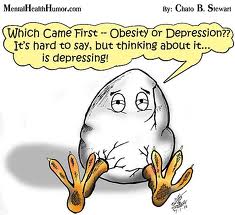
The trouble with confounders is twofold. First, statistical manipulation to correct for them is imperfect. Second, and most important, is that you can try to correct for confounders only if you identify them. And there may always be confounders that you have not identified.
The purpose of doing a randomized controlled trial is that, with a large enough sample size, the randomization is very effective in eliminating differences between the two groups (other than the one difference you wish to study) that might occur by chance.
So the sweet-beverage drinkers were a bit more likely, ten years later, to say they'd been diagnosed with depression. And the ones who drank artificially sweetened beverages were a tad more likely than the sugary-drink consumers to say so.

Second, why would a medical journal publish such a study? I don't have a good answer for that one, because the results are not, I think, important enough to justify publication. Third, although it is common for research findings to be presented at medical meetings when they haven't been (and may never be) accepted for publication, why would a medical association issue a press release drawing attention to such findings?
 |
| My favorite beverage. I am an entirely uncompensated spokesperson. |
 |
| This blog has never won any awards. I expect that to remain true. |
But not you. Because you read this blog. And you will say, "Rubbish!"
Subscribe to:
Posts (Atom)