First the forces arrayed against it tried to defeat it but failed. Then the cry was, "Repeal and Replace." The question "Replace with what?" was never adequately answered. And so the opposition moved on to "defund Obamacare." After all, no legislation ever enacted by Congress and signed into law by the president can be implemented without funding, and that funding was not guaranteed in perpetuity in the original bill. So perhaps we could pass a budget for the fiscal year about to begin without funding for the Affordable Care Act (ACA). Or we could say we won't go along the next time we have to raise the ceiling on the national debt unless we abandon funding for the ACA.
What's so bad about the ACA? Let me count the ways it will destroy our health care system, in the view of its detractors.
(1) It will put the government in charge of your health care. This one is being promoted by a television advertisement described by everyone in the media as "creepy." It shows a young woman in a doctor's office, apparently there for a certain kind of physical examination that is common for young women but has few (if any) fans, and the leering practitioner is wearing an Uncle Sam Halloween costume. Needless to say, the woman in the commercial is instantly far less amenable to proceeding with the visit than she was at the start.
This makes me laugh. Those of us in the health care industry know just how much the government is already in charge of your health care. This is because the feds already have very extensive control over how health care is financed, and when you control that.... Well, this seems pretty obvious. There are so many rules about what we can and cannot do that emanate from Washington. The degree of such control has been steadily increasing since the enactment of federal health insurance programs in the 1960s.
(2) It will create death panels. No, it won't. What it will do is quite far from that - and arguably falls quite short of what we should be doing in this area. We spend a very large amount of money on end-of-life care. A substantial part of that spending pays for care that is very unlikely to benefit dying patients. It may prolong life without any meaningful quality. It may prolong suffering without any sort of trade-off that the patient would find worthwhile. The most common reason for the expenditure of vast sums for non-beneficial care is that no one spent time with patients and families to talk about options and how they fit with the patient's personal values. In our health care system, the default is "do everything," and the default is what happens when the patient and family have not given careful consideration, with advice and guidance from a trusted physician, to what they really do and don't want. In the early debates over the ACA, there were provisions that would have required doctors to talk to patients about such things, and from the reaction I thought euthanasia for everyone over 70 was the topic of discussion. When I was a medical student I had a frank discussion with my grandmother about her options. I knew what her state of health was. I knew what CPR was like. I thought she might not want it. I talked to her about it at length, so she could give it some thought and make decisions about what sort of care she wanted. Guess who else talked with her about such things? That's right. Nobody. And in the 30 years since she died, little has changed.
(3) It will raise the cost of health insurance for everyone. This one is rather more complicated. If you currently are paying nothing for health insurance, because you choose not to buy it, your costs will certainly rise. The idea here is that insurance is a mechanism for spreading risk, and risk cannot be spread equitably if some people opt out. This involves a very direct trade-off. If we say everyone has to have insurance, then we take away the only plausible excuse the insurers have for excluding sick people. They say people will just wait to buy insurance until they need it, like someone who buys automobile insurance after his car is stolen or wrecked. We wouldn't allow that. So if we say everyone has to have health insurance, we can tell insurers they may no longer exclude people with "pre-existing conditions" - or charge them higher premiums, which can effectively do the same thing as denial.
In some states, current rates of denial of coverage exceed 30%. The ACA will put an end to that, and requiring everyone to have coverage is essential to making that work.
Similarly, we must require everyone to have insurance at some basic minimum level. Certain things must be covered, with reasonable limits on out-of-pocket expenses. If we don't do that, then we have the same problem as when some people opt out. My dad didn't have a very good opinion of mental health services. I think at some level he thought people with mental illness were just weak characters who should buck up and get a grip on life. He didn't want to pay premiums for health insurance that included mental health services, which he was sure he would never need, to subsidize those who really just needed some life lessons or a sympathetic ear. And there we have the same problem: if we allow those who think they don't need coverage to opt out, we're not spreading risk effectively.
The same principle applies to "catastrophic coverage." If I can afford to pay $50,000 a year out of pocket for health care, I can find a really cheap policy to cover me for expenses beyond that, because the actuarial risk that the insurer will ever pay anything is low. But very few people can accept risk of that magnitude. If the system lets me do it because I can, then once again risk is not being effectively spread. So anyone who currently has coverage that doesn't kick in until spending is in the catastrophic range is going to pay more under the ACA.
On the other hand, many low-income folks will qualify for Medicaid who currently have nothing. And many more who aren't poor enough to qualify for Medicaid will be able, especially with the help of tax credits, to afford health insurance, when up until now it just hasn't been an option. We tend to think of the ones whose employers haven't offered health insurance, but there are plenty of hardworking people who have had "access" to employer-based health coverage, but it has simply exceeded what they could afford to pay. They will no longer have to go without, because under the ACA there is a limit on the percentage of your income that you're expected to pay for coverage before you qualify for a subsidy.
So we are requiring people who heretofore have opted out to enter the risk pool, and requiring people to buy health insurance that has a higher level of coverage than what they would otherwise have chosen, thereby making insurance as a mechanism for spreading the risk truly workable. At the same time, we are adding people to the Medicaid rolls and subsidizing premiums for the working poor who are not quite poor enough to qualify for Medicaid (which will require expenditure of tax dollars). What, then, are we doing? Just ask Joe the Plumber: we are spreading the wealth around.
By now my regular readers know I'm innately conservative. I think the government wastes a lot of money. I like the Jeffersonian ideal of smaller, less intrusive government. I believe in personal responsibility. So why on earth would I like the ACA?
In all honesty, I don't really like the ACA, because I believe the goal is universal coverage, and this will leave us well short of that. We will still have at least 20 million without health insurance coverage. That is my best estimate. Call it pessimistic, but I prefer to be pessimistic and then be pleasantly surprised if things go better than I though they would. This means I have to "like" the ACA because I am not willing to let the perfect be the enemy of the good.
Does it spread the wealth around? Absolutely. Will it personally cost me more in health insurance premiums, or taxes, or both? Guaran-damn-teed. So why am I for it?
I have spent the last 30 years practicing medicine and observing a very painful fact of life. I live in the wealthiest nation in the history of the world, a nation that is at the same time the only modern, industrialized nation on this globe that fails to provide a universal system of health care. Every single day of my working life I am face to face with people whose health has been neglected because the resources are simply not available to them to tend to it. The consequences of that neglect land them in the emergency department, far worse off than should ever have come to pass.
Eighty-five percent of Americans have health insurance. Many of them really don't care about the other 15%. I am ashamed to live in a society where that is true. I am heartened by the thought that those of us who do care are in the majority. The latest public opinion polls say more than 60% oppose the "defunding" of the ACA. Maybe many of the other 40% dislike the ACA for other than selfish reasons. But to those who oppose it because they do not support the ideal of decent health care for all as a societal responsibility, I say shame on you.
Wednesday, September 25, 2013


Sunday, September 8, 2013
Syria: A Stamp of Disapproval?
Bashar al-Assad has been directing the use of chemical weapons against his own country's people, in violation of "international norms" - and of an agreement to which Syria is not a signatory.
The "international community" is outraged. Let me point out that there really is no such thing as the international community outside of works of fiction. There is an organization called the United Nations. It is ineffectual and often ignored, but it actually exists, unlike the "international community."
So what about that outrage? If the outrage is international, what sort of international action is planned based on the outrage? Right. None. The UN is doing nothing. There is no "coalition of the willing." The French support action by the United States. That's worth something, I suppose, given the Franco-American friendship that goes back to the 18th century. But it's hardly tangible.
So what are we going to do? The president is talking about using Tomahawk cruise missiles, perhaps 200 of them, at a cost of about $1M apiece. That is a $200M Stamp of Disapproval. At what will we target them? Chemical weapons stockpiles? Obviously a bad idea, the notion of blowing them up and dispersing sarin gas across the countryside. How about the manufacturing facilities? Well, they're buried underground, where cruise missiles don't reach, and they're probably buried well enough that our supply of "bunker buster" bombs, which haven't been upgraded in the last decade, won't be effective. We could disrupt "command and control" - for a few weeks, maybe. Not exactly a well-chosen objective.
We're not aiming for regime change, which is just as well. What we'd like in Syria is a secular democracy, such as one finds in any number of other countries in the region. That number happens to be one, and it's Israel. The idea of secular democracy is about as likely to catch on in the Arab Middle East as Miley Cyrus is to be invited to put on a "twerking" demonstration at the Saudi Royal Palace in Riyadh.
So just what is the objective? Two days from now, on the eve of the twelfth anniversary of the attacks on the World Trade Center and the Pentagon, President Obama will address the nation on prime time television. Presumably he will answer that question. Until then, I am left to speculate. And, as my daughters and other young adults might say, "I got nothin'." At least nothing that makes any sense or seems achievable.
We certainly cannot look to the examples of Afghanistan, Iraq, or Libya to find good results, but then when you are presuming to choose among various groups who all despise the Judeo-Christian West and its values, you really cannot expect to accomplish good things (from our perspective) by replacing one with another.
Why do we care about the ghastly happenings in Syria enough to risk initiating a large-scale regional war? In 1994 in Rwanda, half a million people were killed in a genocide of shocking proportions over a period of one hundred days. And we did ... nothing. The "international community" also sat on the sidelines. Oh, that's right, it created the International Criminal Court, which has been marvelously effective. In the decade since its creation, it has yielded one conviction (now being appealed). President Clinton has described US inaction as one of his administration's major foreign policy failures. Hello, Captain Obvious!
But we don't really care about Africa, do we? It's the Dark Continent. That makes it easy for us to pretend we don't see what happens there. There isn't any oil (except in Nigeria). Geopolitical instability there doesn't seem to affect US interests. The Mideast is another story altogether. Lots of US interests there. The world's economy is very directly affected by the stability (or lack thereof) of the region. So, if anyone tells you that our interest in stopping the killing in Syria is humanitarian, repeat after me: "Yeah, right."
So the president may be able to convince us that important US national security interests are at stake in the region and that intervening in some fashion in the Syrian government's appalling attacks on the country's own population will serve American purposes. I've been trying to connect those dots since this became the lead story in every day's news reporting, and I'm still not seeing it.
I don't see how we will do anything to stop Assad's war crimes. I don't see any prospects for starting Syria on a path to becoming a secular democracy. And I think those are the only two goals worth pursuing. The president has not made his case yet. Most surveys of public opinion show that his style of "leading from behind," as it is derisively called by Republicans, has convinced very few Americans that his plans for intervention make any sense at all. I'll be working Tuesday evening, but I expect to watch him later, courtesy of my DVR, or at least read his speech online. I'm openminded.
Mr. President, you got some 'splainin' to do.
The "international community" is outraged. Let me point out that there really is no such thing as the international community outside of works of fiction. There is an organization called the United Nations. It is ineffectual and often ignored, but it actually exists, unlike the "international community."
So what about that outrage? If the outrage is international, what sort of international action is planned based on the outrage? Right. None. The UN is doing nothing. There is no "coalition of the willing." The French support action by the United States. That's worth something, I suppose, given the Franco-American friendship that goes back to the 18th century. But it's hardly tangible.
So what are we going to do? The president is talking about using Tomahawk cruise missiles, perhaps 200 of them, at a cost of about $1M apiece. That is a $200M Stamp of Disapproval. At what will we target them? Chemical weapons stockpiles? Obviously a bad idea, the notion of blowing them up and dispersing sarin gas across the countryside. How about the manufacturing facilities? Well, they're buried underground, where cruise missiles don't reach, and they're probably buried well enough that our supply of "bunker buster" bombs, which haven't been upgraded in the last decade, won't be effective. We could disrupt "command and control" - for a few weeks, maybe. Not exactly a well-chosen objective.
We're not aiming for regime change, which is just as well. What we'd like in Syria is a secular democracy, such as one finds in any number of other countries in the region. That number happens to be one, and it's Israel. The idea of secular democracy is about as likely to catch on in the Arab Middle East as Miley Cyrus is to be invited to put on a "twerking" demonstration at the Saudi Royal Palace in Riyadh.
So just what is the objective? Two days from now, on the eve of the twelfth anniversary of the attacks on the World Trade Center and the Pentagon, President Obama will address the nation on prime time television. Presumably he will answer that question. Until then, I am left to speculate. And, as my daughters and other young adults might say, "I got nothin'." At least nothing that makes any sense or seems achievable.
We certainly cannot look to the examples of Afghanistan, Iraq, or Libya to find good results, but then when you are presuming to choose among various groups who all despise the Judeo-Christian West and its values, you really cannot expect to accomplish good things (from our perspective) by replacing one with another.
Why do we care about the ghastly happenings in Syria enough to risk initiating a large-scale regional war? In 1994 in Rwanda, half a million people were killed in a genocide of shocking proportions over a period of one hundred days. And we did ... nothing. The "international community" also sat on the sidelines. Oh, that's right, it created the International Criminal Court, which has been marvelously effective. In the decade since its creation, it has yielded one conviction (now being appealed). President Clinton has described US inaction as one of his administration's major foreign policy failures. Hello, Captain Obvious!
But we don't really care about Africa, do we? It's the Dark Continent. That makes it easy for us to pretend we don't see what happens there. There isn't any oil (except in Nigeria). Geopolitical instability there doesn't seem to affect US interests. The Mideast is another story altogether. Lots of US interests there. The world's economy is very directly affected by the stability (or lack thereof) of the region. So, if anyone tells you that our interest in stopping the killing in Syria is humanitarian, repeat after me: "Yeah, right."
So the president may be able to convince us that important US national security interests are at stake in the region and that intervening in some fashion in the Syrian government's appalling attacks on the country's own population will serve American purposes. I've been trying to connect those dots since this became the lead story in every day's news reporting, and I'm still not seeing it.
I don't see how we will do anything to stop Assad's war crimes. I don't see any prospects for starting Syria on a path to becoming a secular democracy. And I think those are the only two goals worth pursuing. The president has not made his case yet. Most surveys of public opinion show that his style of "leading from behind," as it is derisively called by Republicans, has convinced very few Americans that his plans for intervention make any sense at all. I'll be working Tuesday evening, but I expect to watch him later, courtesy of my DVR, or at least read his speech online. I'm openminded.
Mr. President, you got some 'splainin' to do.
Sunday, August 11, 2013
The Business of Shaving
Recently a friend (high school classmate, now a Facebook friend whom I've not seen since high school) posted a status update that afforded a glimpse into his exploration of the art of shaving (the straightforward meaning of that phrase, not the Website of that name). I was intrigued.
 Over the years I've used everything from the old fashioned safety razor, holding a single blade that, in my youth, cost 10¢ to the current high-tech cartridges that have five blades and cost upwards of $4.
I've also used electric shavers from all of the major manufacturers.
[I will briefly dispense with the electrics. Battery
 life, meaning how long the battery lasts until it will no longer hold a charge, meaning it's no longer a cordless rechargeable, is pathetic. Keeping the blades sharp and lubricated, finding the right pre-shave conditioner to suit one's beard, and developing the technique needed to get the closest and smoothest possible shave are all far more trouble than it's worth. Even if you are meticulous about all of that and spend $200 for a top model, you still cannot get a shave as close and smooth as you can with a blade.]
 [I must also say a few words about the old-fashioned straight razor. I go to a barber who is a traditional Italian practitioner of the art, and he assures me it's far more difficult to learn to use a straight razor on oneself than on a customer. That, he says, is why the safety razor got its name - and why he uses one on himself.]
The post by Bill (my old friend, a talented writer) piqued my interest. He was going old school, to the traditional wet shave with a safety razor and shave soap applied with a brush. Gee, I wondered, was that back-to-the-basics approach economical?
Well, that depends. Blades for a safety razor can be had for as little as 25¢ apiece, although the fancy German steel versions cost more than a dollar. That's still a lot cheaper than $4+ for the high-tech cartridges. But then what about shaving cream or soap? Again, you can spend a little or a lot. You can buy a traditional cream that comes in a tube that costs less than $10 and claims to be enough for 100 shaves when applied in the recommended thin layer. You can spend $50 for a similar amount of really fancy stuff. And how are you going to apply it? With your hand, or a brush? A shaving brush made of synthetic material is cheap. Boar bristles cost a good bit more.
The traditional material, introduced by the French centuries ago, is badger hair, and you can spend $200 for an elegant brush with an exotic handle. The aficionados say there is nothing like badger to prepare the beard for the best possible shave.
 The most common choice for lathering is the stuff that comes in a can and that every supermarket and drugstore carries, and that will probably cost somewhere around 10¢ a shave, give or take, depending on how much you use.
So, at the cheap end, buy a handle for a few bucks, blades that cost 25¢ apiece in bulk, and the inexpensive shave cream or gel in an aerosol can, and you're probably going to spend about 15¢ a shave. But so many of us spend so much more. And big companies like Gillette put a lot of money into marketing to get us to do just that. They are very successful in getting us to spend more than $4 apiece for their high-tech cartridges. (The best online price I found for the Fusion Pro-Glide was about $3.50.)
Remember, Gillette is the company that brought us the original
 double-edged safety razor blade, patented in 1904 and supplied to American troops in World War I. But Gillette does a lot of research on design, and their engineers are quite convinced that each advance, adding blades up to their current five-blade design, has meant a better shave: smoother, closer, easier, faster, less dependent on perfect technique, and with less irritation. If you shave every day and put in a new cartridge every week, which is a common pattern, you'll be spending 50¢ a shave just for the blades. Some men use a cartridge far longer than a week, but I can tell the difference between shave #1 and shave #7, so I find the weekly routine sensible.
With a bit of guidance from my friend Bill, I learned that there are others selling competitive cartridges for less. And that made me wonder: are they really as good? How can that be? If they are sacrificing nothing in quality of materials and manufacturing process, if they are attentive to quality control and spending enough on marketing to have a successful business model, how can their product be that much cheaper? It has to be profit. And my regular readers know how I am fascinated by profit and the profit motive.
In my online research I have found two companies making razors and cartridges clearly intended to compete with Gillette's top-of-the-line Fusion Pro-Glide model. Both of them cost about a third less. I have tried out one of them and have judged it to be of comparable quality and performance. That made me really keen to investigate profit.
 An article published in 2009 gave me some answers. The Gillette Fusion Pro-Glide cartridge costs less than 10¢ to manufacture.
Add another few cents for packaging. Each cartridge brings about $2.50 in profit for Gillette and another 75¢ profit for the retailer. Of course there are some distribution costs.
But even considering the cost of research and development, that per-cartridge profit for Gillette is eye-popping. It's no wonder that Gillette is the most profitable division of parent company Procter & Gamble, with a profit margin upwards of 30%. Gillette makes Big Pharma look like pikers.
I was raised by parents who belonged to labor unions.
My dad was not quite a socialist,
 but he was a staunch believer in workers' rights and the importance of protecting them. And he saw corporate greed almost everywhere he looked. Maybe he sometimes saw it when it really wasn't there, but there is so much of it in America that one really needn't use any imagination to see it around every corner or in every nook and cranny. I'm sure this is why, at least in part, I am always ready to believe that every manufacturer is engaging in price gouging. Very consistently, over the years, my willingness to believe has been supported by cold, hard facts. This is one of those instances.
But hey, I thought, maybe the undercut-pricing competitors are making their blades overseas, where labor costs are lower, while Gillette's razors are manufactured right here in the good ol' US of A. Sure enough, Dollar Shave Club, which started up early last year, makes its stuff in Asia. So what about Gillette, the Goliath to such Davids? Seven years ago Gillette opened a new facility, which is its largest manufacturing plant for razors and blades in ... Poland. If you want to help the Poles and think the Asians are already quite sufficiently economically successful without any more help from exports to the US, then go ahead and stick with Gillette. If you think manufacturing is now global and it really makes no difference, or that you're happy to buy American, but if it's not American it doesn't matter where it's from as long as it's not sweatshop labor, then have a look at the competitors. (There's another one, called Dorco, for which I cannot vouch, because I have not tried their products, but they certainly deserve mention.)
For me the calculus is simple - so simple that it is not, of course, calculus, but mere arithmetic. Sacrifice profit to give me a product of equal worth at a lower price, and I will be a customer.
One more thing: don't lie to me. Last year, convinced - and I wonder what produced this epiphany - that men were dismayed about high prices, Gillette's marketing geniuses initiated a campaign to tell us the cartridges for the Fusion Pro-Glide need be changed only once every 5 weeks. The obvious goal was to get us to think that the lower-priced alternatives weren't going to save us that much money over time, and that we could get real savings right away just by using the blades longer. If we all did that, their sales could be cut in half overnight, but they knew that wouldn't happen. They just don't want to see their two-thirds share of the market shrink. But when I was using the cartridges for two weeks, I felt a big difference between shave #14 one day and shave #1 the next. So don't tell me five weeks.
Gillette (and the other big boys) could get serious about the competition and lower their prices. That's the American way. Just ask the Walton family. They could drive their competitors out of business in short order. Or they could do it the other American way and try to buy them out. It will be interesting to see how this story unfolds.
I've also used electric shavers from all of the major manufacturers.
[I will briefly dispense with the electrics. Battery
The post by Bill (my old friend, a talented writer) piqued my interest. He was going old school, to the traditional wet shave with a safety razor and shave soap applied with a brush. Gee, I wondered, was that back-to-the-basics approach economical?
 |
| Some prefer exotic materials for the handle other than wood, which might not stand up to moisture over time. |
 |
| Apologies to animal rights activists |
So, at the cheap end, buy a handle for a few bucks, blades that cost 25¢ apiece in bulk, and the inexpensive shave cream or gel in an aerosol can, and you're probably going to spend about 15¢ a shave. But so many of us spend so much more. And big companies like Gillette put a lot of money into marketing to get us to do just that. They are very successful in getting us to spend more than $4 apiece for their high-tech cartridges. (The best online price I found for the Fusion Pro-Glide was about $3.50.)
Remember, Gillette is the company that brought us the original
With a bit of guidance from my friend Bill, I learned that there are others selling competitive cartridges for less. And that made me wonder: are they really as good? How can that be? If they are sacrificing nothing in quality of materials and manufacturing process, if they are attentive to quality control and spending enough on marketing to have a successful business model, how can their product be that much cheaper? It has to be profit. And my regular readers know how I am fascinated by profit and the profit motive.
In my online research I have found two companies making razors and cartridges clearly intended to compete with Gillette's top-of-the-line Fusion Pro-Glide model. Both of them cost about a third less. I have tried out one of them and have judged it to be of comparable quality and performance. That made me really keen to investigate profit.
Add another few cents for packaging. Each cartridge brings about $2.50 in profit for Gillette and another 75¢ profit for the retailer. Of course there are some distribution costs.
But even considering the cost of research and development, that per-cartridge profit for Gillette is eye-popping. It's no wonder that Gillette is the most profitable division of parent company Procter & Gamble, with a profit margin upwards of 30%. Gillette makes Big Pharma look like pikers.
I was raised by parents who belonged to labor unions.
My dad was not quite a socialist,
But hey, I thought, maybe the undercut-pricing competitors are making their blades overseas, where labor costs are lower, while Gillette's razors are manufactured right here in the good ol' US of A. Sure enough, Dollar Shave Club, which started up early last year, makes its stuff in Asia. So what about Gillette, the Goliath to such Davids? Seven years ago Gillette opened a new facility, which is its largest manufacturing plant for razors and blades in ... Poland. If you want to help the Poles and think the Asians are already quite sufficiently economically successful without any more help from exports to the US, then go ahead and stick with Gillette. If you think manufacturing is now global and it really makes no difference, or that you're happy to buy American, but if it's not American it doesn't matter where it's from as long as it's not sweatshop labor, then have a look at the competitors. (There's another one, called Dorco, for which I cannot vouch, because I have not tried their products, but they certainly deserve mention.)
For me the calculus is simple - so simple that it is not, of course, calculus, but mere arithmetic. Sacrifice profit to give me a product of equal worth at a lower price, and I will be a customer.
One more thing: don't lie to me. Last year, convinced - and I wonder what produced this epiphany - that men were dismayed about high prices, Gillette's marketing geniuses initiated a campaign to tell us the cartridges for the Fusion Pro-Glide need be changed only once every 5 weeks. The obvious goal was to get us to think that the lower-priced alternatives weren't going to save us that much money over time, and that we could get real savings right away just by using the blades longer. If we all did that, their sales could be cut in half overnight, but they knew that wouldn't happen. They just don't want to see their two-thirds share of the market shrink. But when I was using the cartridges for two weeks, I felt a big difference between shave #14 one day and shave #1 the next. So don't tell me five weeks.
Gillette (and the other big boys) could get serious about the competition and lower their prices. That's the American way. Just ask the Walton family. They could drive their competitors out of business in short order. Or they could do it the other American way and try to buy them out. It will be interesting to see how this story unfolds.
Sunday, August 4, 2013
Biomedical Ethics & the Law
About six weeks ago the Supreme Court of the State of New York issued an opinion that reminded me of an old joke.
A young law student asks his father, an attorney in practice for decades, to give him some expectation of what he will learn in the upcoming course on ethics. His father offers an illustrative example. You and a classmate pass the bar and go into practice together. A lady comes in to see you about a minor adjustment to her will. She returns the next day to receive her papers and hands you a crisp, new $100 bill in payment for this little bit of work. As she is leaving the office you discover that she actually gave you two brand new $100 bills stuck together. Now you have an ethical dilemma. Do you tell your partner about the extra $100 you made?
A man sought treatment for alcoholism in a hospital emergency department. He then changed his mind and decided to leave. He was apparently quite intoxicated (and the record included a "very high" blood alcohol level). He left, wandered onto a highway, was struck by a vehicle, and was left quadriplegic as a result of his injuries. He sued, claiming he should not have been permitted to leave the ED. The Court said the defendants (physician and hospital) had neither the authority nor the duty (under New York law) to detain the patient.
This decision has been hailed by some of my colleagues as a victory for common sense and for the principle that there is such a thing as personal responsibility. And I must admit to being pleased that the doctor and the hospital were not held legally responsible for this tragedy. Further, I can easily imagine circumstances under which medical personnel could not possibly be responsible. For example, if the patient seemed cooperative and fully desirous of treatment for his addiction and then slipped out of the building undetected, it would be quite unreasonable to hold them to account for subsequent events.
Nevertheless, this case offers an excellent example of how ethical and legal analysis can lead to quite different conclusions.
Often when we're trying to figure out the right thing to do, we can frame the question as an ethical dilemma. Sometimes that means there are competing interests that must be weighed against each other. Sometimes, as in a case such as this, there are principles of biomedical ethics in conflict, and we must decide which takes precedence.
The two principles here are beneficence (the duty to help the patient) and autonomy (the patient's right to make his own decisions about what happens to him). In the United States (and some other Western societies) autonomy is placed at the top of the hierarchy. This means if one is going to do something that violates patient autonomy, there must be a very good reason. The most common such reason is that the person is mentally ill and intends to harm himself or others. In such a situation, there is agreement that the duty to protect the patient (and possibly others) from harm takes priority over the duty to respect his individual autonomy.
Another common situation is one in which a patient wishes to refuse treatment or to leave a hospital against medical advice. Sometimes such a decision may place the patient in peril of serious harm. So, for example, if someone is having a heart attack, there is a very real risk of sudden death or severe, permanent disability attendant upon a decision to refuse treatment and leave the hospital. But we do not violate the patient's autonomy and prevent him from leaving, except....
We make an exception for lack of decisional capacity. And to do that we must understand what decisional capacity is and how to assess it.
Let us use the example of the heart attack. If you are having a heart attack and decide to refuse treatment and leave the hospital, my first priority is to try to change your mind. I will explain my treatment recommendations and the risks you are assuming by rejecting them. I will enlist the aid of those whose opinions or feelings mean more to you than mine: your family or friends, or your personal physician. (Maybe even your nurse, because she has impressed you as a warm and caring person, and you have no suspicion that anything she tells you is motivated by pecuniary gain.) I will try to find out why you want to ignore sound medical advice and whether you have concerns that can be effectively addressed. If you say you cannot stay in the hospital because there will be no one to feed your dog, I will try to figure out how we can get somebody to feed your dog. I will point out that if you die, your dog will be worse off than going hungry for a little while and tell you that in the wild, dogs go for days without eating, and that's why even domesticated dogs typically eat like they've had nothing to eat for a long time, and don't know when the next meal is coming, every time a bowl of food is put in front of them.
One of the things I must do when someone is making a really bad (meaning high-risk) decision is assess decisional capacity. Does the patient understand the reason for my recommendations? Does the patient understand my explanation of the risks of not following those recommendations? Is the patient genuinely willing to accept those risks? Can the patient explain why s/he is rejecting the advice and why s/he thinks it makes sense to accept the risks? It should be apparent that, at the same time this process enables me to assess decisional capacity, it also allows me to make sure there have been no misunderstandings of the information I've conveyed and to correct any there may be.
All of this requires significantly time-consuming verbal communication. I must be satisfied that the patient really understands my advice, and the risks, and that requires that the patient explain them back to me in his own words. I also need him to explain his reasons for rejecting the advice. His reasons for rejecting the advice don't have to satisfy my sense of what is logical or rational or makes sense. So, for example, if he gives me a list of recently deceased friends and relatives and tells me they all died in hospitals, and so there is no way he is going to stay in a hospital, and he rejects all my attempts to demonstrate the logical fallacies in his reasoning, that doesn't mean he lacks decisional capacity. If, on the other hand, he tells me if he stays in the hospital, as soon as he falls asleep tonight, space aliens or demons from Hell will appear in his room and abduct or incinerate him, I will be inclined to think he is delusional and mentally ill and does not have decisional capacity. (For the sake of clarity, I should note that a delusion is not a belief that is merely false. Rather, it is a belief that could not possibly be true.)
If his decision is based on values that are different from mine, I must respect that. For example, he may be perfectly comfortable with the risk of death and prefer to take his chances and die at home rather than be hospitalized and subjected to modern medical technology. I may then wonder (and even ask) why he came to the hospital in the first place, and my values may be completely different, because if I were similarly situated, I would want to live to see my grandchildren graduate from college and get married. But those are my values, and I have neither the right to impose them on him nor any reason to allow that difference to cast doubt on his decisional capacity.
Getting back to the particular case in New York, it is important to understand that a high blood alcohol level does not necessarily mean that a patient lacks decisional capacity. People who are habitual drinkers are often lucid and able to carry on coherent and rational conversation with blood alcohol levels that would render me unconscious. They are also often able to walk with a steady gait and cross streets carefully and safely. So, when we are deciding when a person who has been brought to the ED drunk can be safely discharged, we base that on whether the person can "walk and talk" normally (among other things), not on any number.
So let us assume, for the sake of argument, that the man in the New York case made his intent to leave known to ED personnel rather than deceiving them and slipping out of the building unnoticed. Did they consider his decision to be against medical advice? Did they think it was unsafe for him to leave? Did they assess his decisional capacity? Did they consider restraining him (either with tranquilizing drugs or with physical restraints), thus violating his autonomy in order to protect him? (Such decisions are not always straightforward, because restraints of either kind carry their own risks.) These are all the questions I would ask if I were reviewing the case and judging it for its adherence to principles of biomedical ethics.
While I consider it important to avoid violating the law in my practice of medicine, I consider it even more important to avoid violating principles of biomedical ethics. If I obey the law but violate professional ethics - and I'm not saying that's what happened in the New York case, as I think should be clear by now - that will not help me to sleep at night if there is a tragic outcome.
[Note: the author has served on hospital ethics committees for 25 years and on the ethics committee of the American College of Emergency Physicians for 15 years.]
A young law student asks his father, an attorney in practice for decades, to give him some expectation of what he will learn in the upcoming course on ethics. His father offers an illustrative example. You and a classmate pass the bar and go into practice together. A lady comes in to see you about a minor adjustment to her will. She returns the next day to receive her papers and hands you a crisp, new $100 bill in payment for this little bit of work. As she is leaving the office you discover that she actually gave you two brand new $100 bills stuck together. Now you have an ethical dilemma. Do you tell your partner about the extra $100 you made?
A man sought treatment for alcoholism in a hospital emergency department. He then changed his mind and decided to leave. He was apparently quite intoxicated (and the record included a "very high" blood alcohol level). He left, wandered onto a highway, was struck by a vehicle, and was left quadriplegic as a result of his injuries. He sued, claiming he should not have been permitted to leave the ED. The Court said the defendants (physician and hospital) had neither the authority nor the duty (under New York law) to detain the patient.
This decision has been hailed by some of my colleagues as a victory for common sense and for the principle that there is such a thing as personal responsibility. And I must admit to being pleased that the doctor and the hospital were not held legally responsible for this tragedy. Further, I can easily imagine circumstances under which medical personnel could not possibly be responsible. For example, if the patient seemed cooperative and fully desirous of treatment for his addiction and then slipped out of the building undetected, it would be quite unreasonable to hold them to account for subsequent events.
Nevertheless, this case offers an excellent example of how ethical and legal analysis can lead to quite different conclusions.
Often when we're trying to figure out the right thing to do, we can frame the question as an ethical dilemma. Sometimes that means there are competing interests that must be weighed against each other. Sometimes, as in a case such as this, there are principles of biomedical ethics in conflict, and we must decide which takes precedence.
The two principles here are beneficence (the duty to help the patient) and autonomy (the patient's right to make his own decisions about what happens to him). In the United States (and some other Western societies) autonomy is placed at the top of the hierarchy. This means if one is going to do something that violates patient autonomy, there must be a very good reason. The most common such reason is that the person is mentally ill and intends to harm himself or others. In such a situation, there is agreement that the duty to protect the patient (and possibly others) from harm takes priority over the duty to respect his individual autonomy.
Another common situation is one in which a patient wishes to refuse treatment or to leave a hospital against medical advice. Sometimes such a decision may place the patient in peril of serious harm. So, for example, if someone is having a heart attack, there is a very real risk of sudden death or severe, permanent disability attendant upon a decision to refuse treatment and leave the hospital. But we do not violate the patient's autonomy and prevent him from leaving, except....
We make an exception for lack of decisional capacity. And to do that we must understand what decisional capacity is and how to assess it.
Let us use the example of the heart attack. If you are having a heart attack and decide to refuse treatment and leave the hospital, my first priority is to try to change your mind. I will explain my treatment recommendations and the risks you are assuming by rejecting them. I will enlist the aid of those whose opinions or feelings mean more to you than mine: your family or friends, or your personal physician. (Maybe even your nurse, because she has impressed you as a warm and caring person, and you have no suspicion that anything she tells you is motivated by pecuniary gain.) I will try to find out why you want to ignore sound medical advice and whether you have concerns that can be effectively addressed. If you say you cannot stay in the hospital because there will be no one to feed your dog, I will try to figure out how we can get somebody to feed your dog. I will point out that if you die, your dog will be worse off than going hungry for a little while and tell you that in the wild, dogs go for days without eating, and that's why even domesticated dogs typically eat like they've had nothing to eat for a long time, and don't know when the next meal is coming, every time a bowl of food is put in front of them.
One of the things I must do when someone is making a really bad (meaning high-risk) decision is assess decisional capacity. Does the patient understand the reason for my recommendations? Does the patient understand my explanation of the risks of not following those recommendations? Is the patient genuinely willing to accept those risks? Can the patient explain why s/he is rejecting the advice and why s/he thinks it makes sense to accept the risks? It should be apparent that, at the same time this process enables me to assess decisional capacity, it also allows me to make sure there have been no misunderstandings of the information I've conveyed and to correct any there may be.
All of this requires significantly time-consuming verbal communication. I must be satisfied that the patient really understands my advice, and the risks, and that requires that the patient explain them back to me in his own words. I also need him to explain his reasons for rejecting the advice. His reasons for rejecting the advice don't have to satisfy my sense of what is logical or rational or makes sense. So, for example, if he gives me a list of recently deceased friends and relatives and tells me they all died in hospitals, and so there is no way he is going to stay in a hospital, and he rejects all my attempts to demonstrate the logical fallacies in his reasoning, that doesn't mean he lacks decisional capacity. If, on the other hand, he tells me if he stays in the hospital, as soon as he falls asleep tonight, space aliens or demons from Hell will appear in his room and abduct or incinerate him, I will be inclined to think he is delusional and mentally ill and does not have decisional capacity. (For the sake of clarity, I should note that a delusion is not a belief that is merely false. Rather, it is a belief that could not possibly be true.)
If his decision is based on values that are different from mine, I must respect that. For example, he may be perfectly comfortable with the risk of death and prefer to take his chances and die at home rather than be hospitalized and subjected to modern medical technology. I may then wonder (and even ask) why he came to the hospital in the first place, and my values may be completely different, because if I were similarly situated, I would want to live to see my grandchildren graduate from college and get married. But those are my values, and I have neither the right to impose them on him nor any reason to allow that difference to cast doubt on his decisional capacity.
Getting back to the particular case in New York, it is important to understand that a high blood alcohol level does not necessarily mean that a patient lacks decisional capacity. People who are habitual drinkers are often lucid and able to carry on coherent and rational conversation with blood alcohol levels that would render me unconscious. They are also often able to walk with a steady gait and cross streets carefully and safely. So, when we are deciding when a person who has been brought to the ED drunk can be safely discharged, we base that on whether the person can "walk and talk" normally (among other things), not on any number.
So let us assume, for the sake of argument, that the man in the New York case made his intent to leave known to ED personnel rather than deceiving them and slipping out of the building unnoticed. Did they consider his decision to be against medical advice? Did they think it was unsafe for him to leave? Did they assess his decisional capacity? Did they consider restraining him (either with tranquilizing drugs or with physical restraints), thus violating his autonomy in order to protect him? (Such decisions are not always straightforward, because restraints of either kind carry their own risks.) These are all the questions I would ask if I were reviewing the case and judging it for its adherence to principles of biomedical ethics.
While I consider it important to avoid violating the law in my practice of medicine, I consider it even more important to avoid violating principles of biomedical ethics. If I obey the law but violate professional ethics - and I'm not saying that's what happened in the New York case, as I think should be clear by now - that will not help me to sleep at night if there is a tragic outcome.
[Note: the author has served on hospital ethics committees for 25 years and on the ethics committee of the American College of Emergency Physicians for 15 years.]
Thursday, August 1, 2013
Is this the Pirates' Year?

Great game last night.
The Pirates have reached the end of July in an unfamiliar place. For most of the last two decades, they haven't been above .500 beyond June. Last year was a promising exception, when they were 16 games over .500 in early August, but that was followed by the most dramatic collapse in the final two months of a season in the history of Major League Baseball, and they finished yet again below .500, extending their streak of losing seasons to 20.
Now, at the end of July, they are 23 games above .500. Heck, they're 2 games above .600! They have won the first four games of a five-game series with the St. Louis Cardinals and, in so doing, have taken possession of first place in the National League's Central Division. This is a match-up of this season's best hitting team (the Cardinals) against the season's best pitching team (the Pirates). And the old adage - popular with pitchers, at least - is that good pitching beats good hitting.
So where is the dark cloud that might envelop this silver lining?
Well, you could say that the Pirates just happened to catch the Cardinals in a batting slump. And you could say the real strength of the Pirates' pitching roster is in the bullpen, and it takes some pretty astute managing to make sure games don't get away from you before you go to the relievers. And you could say all it will take is for the Pirates to hit their own rough patch, and the negative psychology built up over 20 losing seasons will take over, and we will see that, deep down, they still don't believe they are a contender - and they won't be.
But the Bucs have already hit a couple of skids this season and have pulled out of them. And last night I saw examples of how to use a pitching staff - and a distinct lack of negative psychology.
Starting pitcher Jeff Locke was throwing strikes, but the Cardinals were able to connect, and they got some lucky hits, just out of reach of Pirates infielders who may have been feeling the effects of having played 20 innings the day before. He gave up 4 runs in 4 innings. But the Pirates' bats weren't silent, and after the Cardinals' 4th they were down only 2 runs.
Then Vin Mazzaro came in and shut the Redbirds down. Four innings. Four zeroes in the Cardinals' scoring line. Meanwhile, the Pirates hadn't given up. They kept plugging, getting two more runs in their half of the 4th and 5th innings to tie it up.
What I heard in the stands was promising, too. There was no murmuring among the fans, no pessimistic predictions that the Pirates seemed to be trying to find a way to lose this game and put a damper on the enthusiasm generated by their sweep of the doubleheader the day before. Just lots of noise. The electronic scoreboard signs saying "Make Some Noise" were quite unnecessary.
The Buccos got their go-ahead run in the bottom of the 8th. And the fans responded. In every section of the ballpark I could see at least one person standing and waving a large "Jolly Roger" flag.
In the top of the 9th, Mark Melancon, back in his closer role with Jason Grilli on the disabled list, came to the mound from the bullpen to a cacophony of cheers. And he performed like he was there to show the world that when he comes in with a lead and one inning to pitch, there can be no doubt of victory.
Two decades of losing seasons have made it difficult to be optimistic, especially after last year's August collapse. But the team I watched last night does not seem to be the same team that crumbled last August. The tying run in the bottom of the 5th was illustrative. Starling Marte got a lead-off single. He bunted. This man can bunt. And he has the speed to beat it out for a single. Then he stole second. More speed. He moved to third on a ground-out. Then he scored on a sacrifice fly. But it didn't look like a sacrifice fly. It looked like a clean single, and Marte broke for the plate when the ball cleared the infield. He had to run back to third to tag up, and this ball was not deep in the outfield. There was no play at the plate. More speed. So that was the tying run. Not the easy kind, like Neil Walker's homer in the third. But it takes both kinds to win ball games.
And - pssst! - I have some inside information to share. The Pirates won their division in 1990, 1991, and 1992. They haven't had a winning season since then. Shortly after the 1992 season ended - in November of that year - my younger daughter, Rose, was born. And I have teased her, since she was old enough to roll her eyes at me about it, that she is the reason the Pirates have strung together all these losing seasons. But she has been spending this summer in California! And she will be here for only a couple of days before returning to college in New England. The Pirates will never know she's here. So this is it: this is their year to end the losing streak.
I also have a recommendation. Across the street from PNC Park is a place called the Beer Market. It's a BYOF (bring your own food) establishment. So we had excellent deli-style sandwiches from home and arrived at the Beer Market at 4:30. That gave us a couple of hours for a leisurely dinner before the game. This place has more than five hundred beers to choose from, and more than five dozen on draft. If you like variety, you can't beat it. And you can order "beer flights," choosing anything from the draft menu in 4-ounce "shots," four of them on a little wooden tray. I took advantage of this to try eight beers that I'd never had before, knowing that I'd have at least four hours afterward (it ended up being 5) for my blood alcohol level to approach zero before I had to drive home.
I am not a sports pundit. And so no one expects me to make any predictions (or at least not stand by them) with two months to go in the season. But what I watched last night made me think this will definitely be the year that the Pirates break the losing streak. And it may well be the year they do what they haven't done since the year before the streak began: win their division.
Sunday, July 28, 2013
Obesity is a Disease?
The question mark at the end of the title is there not so much because I'm questioning whether obesity is a disease but because I wonder why anyone thinks it's useful to say so.
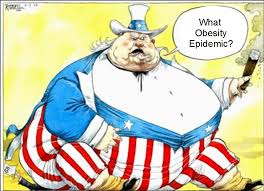 At the recent annual meeting of the American Medical Association, our nation's largest organization of doctors, the House of Delegates adopted a resolution calling for the AMA to "recognize obesity as a disease state with multiple pathophysiological aspects requiring a range of interventions to advance obesity treatment and prevention.”
By and large we have thought of obesity as a risk factor for other diseases rather than a disease in its own right. So the obese are more likely to have abnormal levels of lipids in the blood (cholesterol, triglycerides) and to have adult-onset diabetes. That makes obesity indirectly a contributor to cardiovascular disease, including heart attacks and strokes.
 It helps to have a definition. The definition we use is based on body mass index (BMI), which is an imperfect but mostly workable measurement of whether a person's weight is in a desirable range. It is calculated from height and weight. If your BMI is higher than 25, you're considered overweight. Once it reaches 30, you're obese.
The reason it's imperfect is that some people with relatively large muscle mass may be quite fit and healthy, and have a percent body fat that is low enough to be enviable, yet have a BMI that is higher than "desirable." That is because muscle is denser than fat, and so it contributes more to body weight. Take two people of the same weight. The one with more muscle and less fat takes up less space; his/her body has less volume. That person is thinner, trimmer, and (all other things being equal) healthier. So if you're muscular and have a relatively low percent body fat, your BMI may falsely suggest you are overweight or even obese.
There are many online calculators, such as the one found here: http://www.nhlbi.nih.gov/guidelines/obesity/BMI/bmicalc.htm
Knowing, then, that obesity puts one at risk for serious health problems, why does it matter if we call it a disease rather than an important risk factor for disease? Well, the supporters of the AMA resolution think it places more emphasis on the importance of helping people (patients) do something about it. They hope that it will cause health insurers to be more likely to pay for interventions that doctors can offer to patients.
 This is the part that I don't get. I don't claim comprehensive knowledge of what health insurance policies pay for - maintaining such a database could be a full-time job - but it is my sense that it is already pretty widespread practice for them to pay for interventions, especially surgical ones, if patients meet certain criteria (meaning a BMI over a given number, evidence that their obesity has caused other significant health problems, and failure of non-surgical approaches like diet and exercise). Maybe it's the part about evidence the patient's obesity has caused related troubles that could change. Maybe the idea is that insurers would pay for surgery even before those other problems have set in.
 What gives me pause, however, is the concern that the push for more and earlier intervention will fail to emphasize behavioral intervention. I work in a health system where there is a lot of surgery for obesity. Surgeons do things to the digestive tract that make it difficult for patients to eat too much or for the GI tract to absorb calories (and important nutrients, too). In the emergency department, of course, we see many patients with complications of surgery, so we get a skewed perspective on this. The patients who have surgery that works well for them and never have any problems don't come to see us in the ED. That having been said, what I see in my work reinforces my belief that lifestyle changes are a much better approach than surgery, because their side effects (the things that happen besides weight loss) tend to be good rather than bad. When one eats a more healthful diet, reduces caloric intake, and gets regular exercise, the things besides weight loss that one experiences are generally positive. The effects on overall health go beyond what can be attributed to weight loss alone.
So try this thought experiment. Suppose we take some people who are quite obese and manage them two different ways. The first group gets "bariatric surgery." The subjects in the second group are assigned a life coach focused on health with special emphasis on diet and fitness. They have regular meetings with the life coach, are urged to keep a diary of their habits related to eating and exercise, and have frequent phone conversations, text messages, e-mails (depending on how plugged in they are to what kinds of communication), all designed to get them to eat a more healthful diet and to get plenty of regular exercise of the sort that will promote health. This is just an overview of how the coaching would work. I haven't worked out all the details, but it's easy to see how it could be done.
My hypothesis: the "life coach" approach would work better, the patients' overall health would improve more, and just as fast, with no complications (short-term or long-term), with long-lasting benefits. Remember, exercise of the right kind does good things for strength and balance and has been associated with improved cognitive function as age advances. My secondary hypothesis is that the overall cost, especially taking surgical complications into account, not to mention long-term effects on health, would be lower (quite possibly much lower) for the non-surgical approach.
 Here I must make a disclosure, because it is a very important source of bias affecting my perspective. I have struggled all my adult life to maintain ideal body weight. I have had two periods of my life characterized by unhealthful lifestyle (poor diet, little exercise) when I gained many pounds, and righted the ship, or reversed course (or any metaphor you like) only after being confronted with evidence that overcame my denial. The second (and more dramatic) time this happened was a bit more than a decade ago. A few years "off the wagon" wrought their havoc, over which time I found myself repeatedly buying clothes in bigger sizes with nary a thought about why that was happening or that I should do something about it. When back pain from a herniated lumbar disk caused a dear friend who is a radiologist and was reviewing my MRI with me to look me in the eye and tell me to lose weight, that finally broke through my denial. My medical friends will appreciate the richness of that experience: getting sound medical advice from a doctor in a "non-patient-care" specialty.
So I took this fat bull by the horns and adopted a regimen of healthful diet and regular calorie-burning exercise. In twelve months I lost just over 100 pounds. Nine years later I'm still fit. My diet could be more prudent some days, and I still tend to eat when I feel stressed, but my exercise regimen has kept my physique - and, I believe, my health - where it belongs.
I believe I am no better than anyone else at breaking old habits or forming new ones. In fact, I'm probably not as good at that as most people. So my own experience has convinced me that the "cure" for this "disease" lies in behavioral (lifestyle) change, not surgery or drugs.
 In recent decades we have medicalized so many things. And behavior is foremost among them. When I was a youth, a lad with a bad temper was said to have a bad temper and was dealt with using punishment for bad behavior and rewards for self-control. Now we label it "intermittent explosive disorder." Are psychiatrists and other mental health professionals any better at dealing with this than caring and persistent parents and teachers? I'm not convinced. When a young person consistently flouts authority and is constantly disobedient, does it help to give it a diagnostic label ("oppositional-defiant disorder") and send the youth to sessions with counselors and therapists? And does drug therapy help any of this? Again, I'm not convinced.
We have medicalized alcoholism. We call it, and treat it as, a disease. Likewise for other forms of substance abuse and dependence. If you go to a meeting of Alcoholics Anonymous, you will hear participants refer to it as a disease. But look at the Twelve Steps. They describe taking a "moral inventory," and the alcoholic works toward (and seeks help with) the removal of "shortcomings" and "defects of character." There is nothing in the Twelve Steps about a disease. Now, of course, the Twelve Steps were around for a long time before the disease model appeared. But AA has not revised the Twelve Steps. I think that's because they work.
So I believe if obesity is a "disease," it is a behavioral disease. And the treatment is changing behavior. Not for everyone, to be sure. Some people have metabolic disorders. (You cannot treat an under-active thyroid with behavioral change.) And some people cannot change their behavior no matter how hard they try. But a lot more obese people should be trying, and trying a lot harder, before they resort to medical or surgical treatment. I teach medical trainees all the time that our interventions should be three things: safe, effective, and cheap. Changing behavior meets all three requirements much better than going under the knife.
Is obesity really a disease? I don't know. And I don't think it matters. Call it a disease, or don't call it a disease, but it is a problem, and for the vast majority of people the solutions lie within themselves, not in the interventions offered by doctors.
By and large we have thought of obesity as a risk factor for other diseases rather than a disease in its own right. So the obese are more likely to have abnormal levels of lipids in the blood (cholesterol, triglycerides) and to have adult-onset diabetes. That makes obesity indirectly a contributor to cardiovascular disease, including heart attacks and strokes.
The reason it's imperfect is that some people with relatively large muscle mass may be quite fit and healthy, and have a percent body fat that is low enough to be enviable, yet have a BMI that is higher than "desirable." That is because muscle is denser than fat, and so it contributes more to body weight. Take two people of the same weight. The one with more muscle and less fat takes up less space; his/her body has less volume. That person is thinner, trimmer, and (all other things being equal) healthier. So if you're muscular and have a relatively low percent body fat, your BMI may falsely suggest you are overweight or even obese.
There are many online calculators, such as the one found here: http://www.nhlbi.nih.gov/guidelines/obesity/BMI/bmicalc.htm
Knowing, then, that obesity puts one at risk for serious health problems, why does it matter if we call it a disease rather than an important risk factor for disease? Well, the supporters of the AMA resolution think it places more emphasis on the importance of helping people (patients) do something about it. They hope that it will cause health insurers to be more likely to pay for interventions that doctors can offer to patients.
 |
| Whatever your politics, it's obvious which one could teach the other about healthful lifestyle |
My hypothesis: the "life coach" approach would work better, the patients' overall health would improve more, and just as fast, with no complications (short-term or long-term), with long-lasting benefits. Remember, exercise of the right kind does good things for strength and balance and has been associated with improved cognitive function as age advances. My secondary hypothesis is that the overall cost, especially taking surgical complications into account, not to mention long-term effects on health, would be lower (quite possibly much lower) for the non-surgical approach.
So I took this fat bull by the horns and adopted a regimen of healthful diet and regular calorie-burning exercise. In twelve months I lost just over 100 pounds. Nine years later I'm still fit. My diet could be more prudent some days, and I still tend to eat when I feel stressed, but my exercise regimen has kept my physique - and, I believe, my health - where it belongs.
I believe I am no better than anyone else at breaking old habits or forming new ones. In fact, I'm probably not as good at that as most people. So my own experience has convinced me that the "cure" for this "disease" lies in behavioral (lifestyle) change, not surgery or drugs.
We have medicalized alcoholism. We call it, and treat it as, a disease. Likewise for other forms of substance abuse and dependence. If you go to a meeting of Alcoholics Anonymous, you will hear participants refer to it as a disease. But look at the Twelve Steps. They describe taking a "moral inventory," and the alcoholic works toward (and seeks help with) the removal of "shortcomings" and "defects of character." There is nothing in the Twelve Steps about a disease. Now, of course, the Twelve Steps were around for a long time before the disease model appeared. But AA has not revised the Twelve Steps. I think that's because they work.
 |
| Not just the fitness industry, but everyone who thinks fitness is important |
Is obesity really a disease? I don't know. And I don't think it matters. Call it a disease, or don't call it a disease, but it is a problem, and for the vast majority of people the solutions lie within themselves, not in the interventions offered by doctors.
Monday, July 22, 2013
Racism and the Trayvon Martin Shooting
The verdict is in. We have all had time to mull it over. The furor on both sides should be settling down. That seems not to be happening, but it may just be that the need to fill airtime on the 24-hour cable news channels and space on all of the online news outlets means that this case won't be let go so easily. And there is still the matter of the investigation by the Department of Justice into whether civil rights charges should be brought against George Zimmerman.
Last year, a couple of months after the shooting, I wrote about the law and the ethical considerations surrounding the use of lethal force in self defense. Those who missed that can find it here [http://bobsolomon.blogspot.com/2012/04/stand-your-ground.html], and I won't go back over all that now. If you didn't read it then, I suggest you do so now if you want to understand that part of the context of the incident, because the propriety of Florida law is once again being debated.
One thing that's important to understand about Florida self-defense law is that the "stand your ground" statute didn't figure into the criminal trial, because counsel for the defense did not bring it up but rather relied solely on traditional considerations in a self-defense case. Was the defendant's decision to use lethal force based on a reasonable fear that he was in immediate peril of death or grievous bodily harm? The hurdle the prosecution had to clear to reach a guilty verdict was a high one. Their answer to this question was no, and they had to prove that Zimmerman's actions were unreasonable beyond a reasonable doubt. That's a daunting challenge, and their case was not strong enough to meet it.
The jury was not deciding any question having to do with race. Their job was to place themselves in the moment - Zimmerman's moment - and decide whether any reasonable person in the same or similar circumstances might have had that same fear and acted accordingly, responding to the situation with lethal force. We know what they decided.
What about the Justice Department's investigation? As I understand applicable law, they would have to conclude that Zimmerman's actions represented a hate crime - that is, his shooting of Trayvon Martin was motivated by race-based hatred of the young man. I believe they will be unable to make such a case, and I believe that's because that isn't what happened.
Nevertheless, the Zimmerman-Martin case is most assuredly about race, and racism, and race relations in the United States. It isn't difficult to see how, once one begins to trace the killing to its origins.
Why did Zimmerman see Martin as a suspicious figure who might be where he was for illegal purposes? Because he was black. Zimmerman, as a neighborhood watch volunteer, was participating in that watch because of neighborhood crime. There had been a series of burglaries committed by young black men. So a young black man walking down the street in that neighborhood naturally raised Zimmerman's suspicions.
There is a perception, based chiefly on statistics, that a disproportionate amount of crime - street crime, ordinary property crime, and violent crime - is committed by young black males. Why are the statistics what they are? The briefest economic analysis yields a straightforward answer. Most ordinary property crime is economically motivated. And thus the disproportionate involvement of young black males, who disproportionately belong to the urban underclass, with high and stubbornly persistent unemployment, directly follows. Similarly, the urban drug culture is an alluring source of income to unemployed youth, and at the same time leads directly to gang violence. The statistics are clear on that as well: most young black men who are killed on our city streets are killed by other young black men, and that is mostly in the context of drug-related gang violence.
So the interaction of Zimmerman and Martin was initiated by simple and straightforward profiling: Martin fit the profile of those who had been engaged in crime in the neighborhood Zimmerman was patrolling.
This sort of profiling has been a hot topic of debate. But one cannot escape its logic. And that logic is based on crime statistics. Those crime statistics exist because we have a large black urban underclass, and that, in turn, is largely a product of the history of race relations in this country.
Over five hundred years ago, white Europeans began transporting enslaved black Africans across the Atlantic ocean to the New World. Traders included the Portugese, the Dutch, and the English. The African slaves were used to work mines (especially gold) and plant and harvest crops (most notably sugar and cotton, as well as tobacco). African slaves were brought to the English colonies as early as 400 years ago (first in Virginia). In the earlier years of this trade, many enslaved Africans died during the voyage across the sea. In the New World, many died at hard labor; it was cheaper to import new slaves than to keep the ones already here healthy. It also did not, until much later, seem economically sensible to have them reproduce, because children of slaves consumed resources without performing any labor for more than a decade, and again it was thought more efficient simply to keep importing new ones. For an excellent review of this ghastly subject in recent human history, I recommend the Pulitzer Prize-winning book Inhuman Bondage, by David Brion Davis, who has written numerous other books on slavery.
Our Founding Fathers incorporated the idea that "all men are created equal" into the Declaration of Independence in 1776. But over a decade later, when they drafted the Constitution in 1787, they did not eliminate the great evil of slavery, instead including it in a compromise that allowed the importation of slaves to continue until 1808 and counted a slave as three fifths of a person for the purpose of enumerating the population and determining states' representation in the United States House of Representatives. The issue of slavery in the new nation alternately simmered and boiled over the next seven decades. Several further compromises were forged to maintain slavery in the South and govern the degree to which it was permitted to expand into newly settled territory. Finally, when Abraham Lincoln, whose views in favor of abolition were well known, was elected in 1860, the southern states, led by South Carolina, seceded from the Union, plummeting the nation into a Civil War, fought both to preserve the Union and ultimately to put an end to slavery through the Emancipation Proclamation (1863) and the Thirteenth Amendment to the Constitution (1865).
For a decade after the Civil War, we went about the business of Reconstruction, but the cause of racial equality was lost. The separation of the races was validated by the Supreme Court in 1896 (Plessy v. Ferguson), which pronounced that "separate but equal" public accommodations for blacks and whites were acceptable, ignoring the fact that the continued acceptance of separation of the races served to assure unequal treatment. Not until 1954 (Brown v. the Board of Education of Topeka, Kansas) did the Court reverse itself and recognize that segregation stood in the way of equality. In the 1960s we enacted civil rights legislation in an effort to correct entrenched unequal treatment in many spheres of American life.
Where are we yet another half century later? The very existence of a black urban underclass answers that question in a most disheartening and emphatic way. We cannot read statistics telling us there are more young black men in prison than in college without understanding that we have so very far to go.
I believe we will eventually overcome the legacy of two and a half centuries of African slavery in this land, followed by another century and a half of segregation and discrimination. We should not prosecute George Zimmerman under federal civil rights statutes. He did not kill Trayvon Martin because Martin was black. But most assuredly the two of them were face to face in what became a violent confrontation because Martin was black, and because that fact made Martin a target of suspicion for a volunteer in a neighborhood anti-crime initiative.
We must change the way our society works so that crime statistics do not paint a picture of the disproportionate involvement of young black men in property crime, and violent crime, and in drug-related gang violence. At the same time we work to reform our society to change those statistics, so men like Zimmerman will not naturally suspect men like Martin of criminal purposes, we must also effect a change in the bitter statistics that tell us most young black men killed in this country are killed by other young black men engaged in criminal enterprises that have become a substitute for robust and lawful economic opportunity.
Last year, a couple of months after the shooting, I wrote about the law and the ethical considerations surrounding the use of lethal force in self defense. Those who missed that can find it here [http://bobsolomon.blogspot.com/2012/04/stand-your-ground.html], and I won't go back over all that now. If you didn't read it then, I suggest you do so now if you want to understand that part of the context of the incident, because the propriety of Florida law is once again being debated.
One thing that's important to understand about Florida self-defense law is that the "stand your ground" statute didn't figure into the criminal trial, because counsel for the defense did not bring it up but rather relied solely on traditional considerations in a self-defense case. Was the defendant's decision to use lethal force based on a reasonable fear that he was in immediate peril of death or grievous bodily harm? The hurdle the prosecution had to clear to reach a guilty verdict was a high one. Their answer to this question was no, and they had to prove that Zimmerman's actions were unreasonable beyond a reasonable doubt. That's a daunting challenge, and their case was not strong enough to meet it.
The jury was not deciding any question having to do with race. Their job was to place themselves in the moment - Zimmerman's moment - and decide whether any reasonable person in the same or similar circumstances might have had that same fear and acted accordingly, responding to the situation with lethal force. We know what they decided.
What about the Justice Department's investigation? As I understand applicable law, they would have to conclude that Zimmerman's actions represented a hate crime - that is, his shooting of Trayvon Martin was motivated by race-based hatred of the young man. I believe they will be unable to make such a case, and I believe that's because that isn't what happened.
Nevertheless, the Zimmerman-Martin case is most assuredly about race, and racism, and race relations in the United States. It isn't difficult to see how, once one begins to trace the killing to its origins.
Why did Zimmerman see Martin as a suspicious figure who might be where he was for illegal purposes? Because he was black. Zimmerman, as a neighborhood watch volunteer, was participating in that watch because of neighborhood crime. There had been a series of burglaries committed by young black men. So a young black man walking down the street in that neighborhood naturally raised Zimmerman's suspicions.
There is a perception, based chiefly on statistics, that a disproportionate amount of crime - street crime, ordinary property crime, and violent crime - is committed by young black males. Why are the statistics what they are? The briefest economic analysis yields a straightforward answer. Most ordinary property crime is economically motivated. And thus the disproportionate involvement of young black males, who disproportionately belong to the urban underclass, with high and stubbornly persistent unemployment, directly follows. Similarly, the urban drug culture is an alluring source of income to unemployed youth, and at the same time leads directly to gang violence. The statistics are clear on that as well: most young black men who are killed on our city streets are killed by other young black men, and that is mostly in the context of drug-related gang violence.
So the interaction of Zimmerman and Martin was initiated by simple and straightforward profiling: Martin fit the profile of those who had been engaged in crime in the neighborhood Zimmerman was patrolling.
This sort of profiling has been a hot topic of debate. But one cannot escape its logic. And that logic is based on crime statistics. Those crime statistics exist because we have a large black urban underclass, and that, in turn, is largely a product of the history of race relations in this country.
Over five hundred years ago, white Europeans began transporting enslaved black Africans across the Atlantic ocean to the New World. Traders included the Portugese, the Dutch, and the English. The African slaves were used to work mines (especially gold) and plant and harvest crops (most notably sugar and cotton, as well as tobacco). African slaves were brought to the English colonies as early as 400 years ago (first in Virginia). In the earlier years of this trade, many enslaved Africans died during the voyage across the sea. In the New World, many died at hard labor; it was cheaper to import new slaves than to keep the ones already here healthy. It also did not, until much later, seem economically sensible to have them reproduce, because children of slaves consumed resources without performing any labor for more than a decade, and again it was thought more efficient simply to keep importing new ones. For an excellent review of this ghastly subject in recent human history, I recommend the Pulitzer Prize-winning book Inhuman Bondage, by David Brion Davis, who has written numerous other books on slavery.
Our Founding Fathers incorporated the idea that "all men are created equal" into the Declaration of Independence in 1776. But over a decade later, when they drafted the Constitution in 1787, they did not eliminate the great evil of slavery, instead including it in a compromise that allowed the importation of slaves to continue until 1808 and counted a slave as three fifths of a person for the purpose of enumerating the population and determining states' representation in the United States House of Representatives. The issue of slavery in the new nation alternately simmered and boiled over the next seven decades. Several further compromises were forged to maintain slavery in the South and govern the degree to which it was permitted to expand into newly settled territory. Finally, when Abraham Lincoln, whose views in favor of abolition were well known, was elected in 1860, the southern states, led by South Carolina, seceded from the Union, plummeting the nation into a Civil War, fought both to preserve the Union and ultimately to put an end to slavery through the Emancipation Proclamation (1863) and the Thirteenth Amendment to the Constitution (1865).
For a decade after the Civil War, we went about the business of Reconstruction, but the cause of racial equality was lost. The separation of the races was validated by the Supreme Court in 1896 (Plessy v. Ferguson), which pronounced that "separate but equal" public accommodations for blacks and whites were acceptable, ignoring the fact that the continued acceptance of separation of the races served to assure unequal treatment. Not until 1954 (Brown v. the Board of Education of Topeka, Kansas) did the Court reverse itself and recognize that segregation stood in the way of equality. In the 1960s we enacted civil rights legislation in an effort to correct entrenched unequal treatment in many spheres of American life.
Where are we yet another half century later? The very existence of a black urban underclass answers that question in a most disheartening and emphatic way. We cannot read statistics telling us there are more young black men in prison than in college without understanding that we have so very far to go.
I believe we will eventually overcome the legacy of two and a half centuries of African slavery in this land, followed by another century and a half of segregation and discrimination. We should not prosecute George Zimmerman under federal civil rights statutes. He did not kill Trayvon Martin because Martin was black. But most assuredly the two of them were face to face in what became a violent confrontation because Martin was black, and because that fact made Martin a target of suspicion for a volunteer in a neighborhood anti-crime initiative.
We must change the way our society works so that crime statistics do not paint a picture of the disproportionate involvement of young black men in property crime, and violent crime, and in drug-related gang violence. At the same time we work to reform our society to change those statistics, so men like Zimmerman will not naturally suspect men like Martin of criminal purposes, we must also effect a change in the bitter statistics that tell us most young black men killed in this country are killed by other young black men engaged in criminal enterprises that have become a substitute for robust and lawful economic opportunity.
Subscribe to:
Posts (Atom)